Menopause Anxiety: Why It Happens and 7 Ways to Find Calm Again
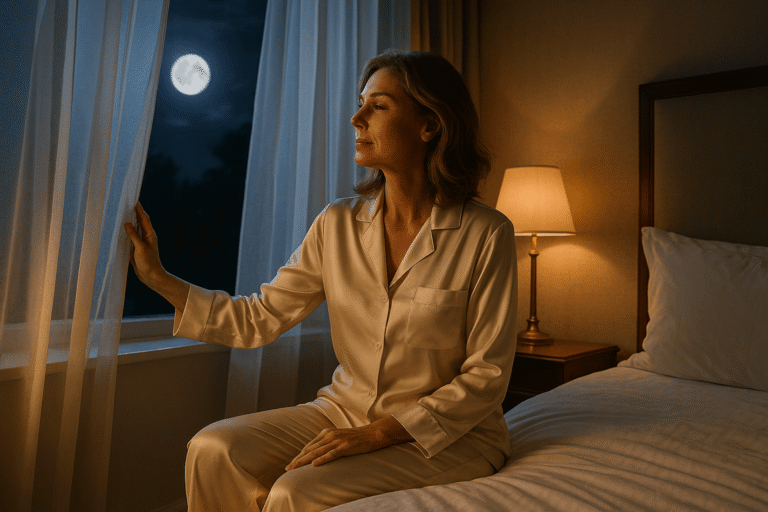
Your heart is racing for no reason. You feel a wave of dread before a meeting that wouldn’t have phased you five years ago. You wake up at 3 a.m. with your mind spiraling over something small. By afternoon, you feel completely fine — and then by evening, the anxious feeling creeps back in.
If any of this sounds familiar, here’s what you need to hear: you are not losing your mind. You are not overreacting. You are not “broken.” You are experiencing menopause anxiety — one of the most common, least talked-about, and most misunderstood symptoms of perimenopause and menopause.
Up to 50% of women in perimenopause report new or worsening anxiety — even women who have never struggled with it before. And for most of them, no one ever explained why it was happening or what to do about it.
In this guide, we’ll break down the real biological reasons menopause anxiety happens, what makes it different from regular anxiety, and walk through 7 strategies that genuinely help women find calm again.
What Menopause Anxiety Actually Feels Like
Menopause anxiety can show up in many forms, and it doesn’t always look the way movies portray anxiety. Common patterns include:
- A racing heart or fluttering sensation in the chest, often out of nowhere
- Sudden waves of dread or unease for no clear reason
- Worrying about things you used to brush off
- Tightness in the chest, jaw, or shoulders
- Difficulty falling asleep because your mind won’t stop
- Waking up at 2 or 3 a.m. with anxiety
- Feeling on edge most of the day
- Panic attacks (sometimes for the first time ever)
- A general sense that “something is wrong” without knowing what
For many women, this is the first time they’ve experienced anxiety in their lives. For others, pre-existing anxiety becomes dramatically worse. Either way, it’s real — and it’s tied to specific biological changes happening in your body.
Why Menopause Anxiety Happens
Menopause anxiety isn’t a character flaw or a “phase you should snap out of.” It’s driven by very real changes in three areas: hormones, neurotransmitters, and the stress response system.
1. Estrogen Affects Serotonin and GABA
Estrogen plays a major role in regulating serotonin (the “well-being” neurotransmitter) and GABA (the brain’s primary “calm down” chemical). When estrogen levels drop and fluctuate during perimenopause, both of these calming systems become less stable.
The result? Your brain has less of the natural braking system it used to rely on to manage stress and worry.
2. Progesterone Drops First — and It’s a Natural Anxiolytic
Progesterone has a calming, anti-anxiety effect — it’s sometimes called “nature’s Valium.” Progesterone often declines before estrogen during perimenopause, which is why many women experience their first real bouts of anxiety years before menopause itself.
This is also why anxiety can hit hardest in your early-to-mid 40s, when you might not even realize you’re already in perimenopause.
3. Cortisol Becomes Hyperactive
This is the under-recognized piece. As estrogen drops, your body becomes more sensitive to stress, and cortisol — your stress hormone — often runs higher and reacts faster. Elevated cortisol amplifies every anxious thought and physical sensation.
It’s not that life is suddenly harder. It’s that your nervous system has fewer “shock absorbers” than it used to.
4. Sleep Disruption Amplifies Everything
Most women in perimenopause also experience sleep changes — and poor sleep is one of the most powerful amplifiers of anxiety. A few nights of bad sleep can turn manageable worry into overwhelming dread. (For practical sleep strategies, see our guide on menopause sleep problems.)
How Menopause Anxiety Is Different From Regular Anxiety
Menopause anxiety has a few features that set it apart from typical anxiety:
- It often appears out of nowhere — without an obvious life trigger
- It can be intensely physical — racing heart, hot flashes triggered by anxiety, chest tightness
- It often hits at specific times — particularly 3-4 a.m. wakeups
- It can fluctuate dramatically — calm one day, intense the next, based on hormonal swings
- It frequently coexists with hot flashes, mood swings, and brain fog
- It tends to respond well to addressing the hormonal piece
Understanding this distinction matters — because the strategies that work for menopause anxiety are slightly different than the ones for generalized anxiety disorder.
7 Ways to Find Calm Again
Here are seven evidence-supported strategies that genuinely help. Most women see meaningful improvement when they combine 3-4 of these consistently over 4-8 weeks.
1. Stabilize Your Blood Sugar
Blood sugar swings are one of the most overlooked triggers of menopause anxiety — and they hit much harder after 40. When your blood sugar crashes, your body releases cortisol, which directly amplifies anxious feelings.
To stabilize:
- Include 25-30 grams of protein at every meal
- Reduce refined sugar and white-flour carbs
- Add fiber (vegetables, beans, whole grains) to every meal
- Don’t skip meals — especially breakfast
- Eat a protein-containing snack before bed if you wake anxious at night
This single change often produces visible mood improvement within 7-14 days.
2. Protect Your Sleep (Even When Anxiety Disrupts It)
The cruel irony of menopause anxiety is that it disrupts sleep — and poor sleep amplifies anxiety. Breaking this cycle is essential.
- Aim for 7-9 hours with a consistent bedtime
- Cool your bedroom to 65-68°F
- Cut caffeine after noon
- Limit alcohol — it shreds deep sleep and worsens 3 a.m. anxiety
- Build a 60-minute “wind down” routine (no screens, dim lights, quiet)
Even one extra hour of quality sleep can dramatically reduce next-day anxiety.
3. Move Daily — But Smart
Movement is one of the most powerful anxiety interventions available. Daily walking (especially in morning sunlight) lowers cortisol, boosts serotonin, and helps the nervous system regulate.
The key for menopause anxiety:
- Daily 30-minute walks, ideally outside
- 2-3 strength training sessions per week
- Gentle yoga or stretching in the evening
- Avoid intense workouts late at night — they can spike cortisol and worsen sleep
The goal isn’t intensity — it’s consistency. A 30-minute walk every day beats a 2-hour intense workout once a week.
4. Practice Paced Breathing and Nervous System Regulation
Your breath is the most direct way to signal “safe” to your nervous system. Paced breathing — slow, deep breaths at about 6 per minute — has been shown to reduce both anxiety symptoms and hot flash frequency.
Simple daily practice:
- Inhale through the nose for 5 seconds
- Exhale through the mouth for 5 seconds
- Practice for 5-10 minutes twice a day (morning and before bed)
- Use the same technique any time anxiety starts to rise
This is free, takes minutes, and has measurable effects within a week.
5. Address Cortisol Directly
Since elevated cortisol is one of the biggest drivers of menopausal anxiety, calming the stress response is non-negotiable. Daily strategies that help:
- 10-15 minutes of morning sunlight exposure
- A short walk during stressful moments instead of more coffee
- Time outside without your phone
- Saying no to commitments that drain you
- Real downtime that isn’t just “Netflix while scrolling”
For women whose anxiety feels especially driven by the cortisol-hormone connection, targeted supplements can be a meaningful addition. MenoRescue uses Sensoril ashwagandha — a clinically researched adaptogen shown to reduce cortisol by up to 27% — along with other ingredients designed for perimenopausal and menopausal women. Many women report that anxiety, emotional reactivity, and sleep quality start improving within the first 2-4 weeks. Our full MenoRescue review breaks down exactly how it works and who it’s best for.
6. Limit Alcohol and Caffeine (More Than You Think)
Both substances become much harder on your nervous system after 40 — and both fly under the radar because they’re so normalized.
Caffeine directly activates the sympathetic nervous system (the “fight or flight” branch). What gave you a pleasant boost at 30 can trigger genuine anxiety at 50. Try cutting off caffeine after noon — or eliminating it for 2 weeks to see how you feel.
Alcohol feels relaxing initially but is one of the most powerful triggers of next-day anxiety. It disrupts sleep, depletes GABA, and creates a rebound anxiety effect 24-72 hours after drinking. Many women find dramatic anxiety reduction simply by going alcohol-free for a month.
7. Build a Support System and Know When to Get Help
One of the hardest parts of menopause anxiety is the loneliness — feeling like nobody else understands what you’re going through. Real support helps. This might look like:
- Telling your partner what’s actually happening
- Connecting with other women in midlife
- Joining a community focused on women’s wellness after 40
- Therapy — especially with a provider familiar with hormonal transitions
- Reading honest, science-based content (like this blog) that names what you’re experiencing
If anxiety significantly affects your daily life, talk to your doctor about additional options — including hormone therapy, low-dose SSRIs, or other treatments designed for menopause-related anxiety.
When to See a Doctor
Reach out to a healthcare provider right away if:
- Anxiety is severely affecting your work, relationships, or daily function
- You’re experiencing panic attacks regularly
- You feel persistently sad, hopeless, or empty for more than 2 weeks
- You’re having thoughts of self-harm
- You’re relying on alcohol or other substances to manage anxiety
- Physical symptoms (racing heart, chest pain) feel concerning or new
Menopause can unmask or amplify underlying anxiety and depression — and these conditions are highly treatable. You deserve support, not silent suffering.
A Realistic Timeline
If you start implementing these strategies consistently:
- Week 1-2: Sleep, protein, and morning walks usually produce subtle but real improvements first
- Week 3-4: Less reactivity to small triggers. The “edge” softens.
- Week 4-8: Anxiety becomes more manageable. You notice you can “talk yourself down” more easily.
- Month 2-3: Real sustained improvement. Many women report feeling “more like myself again”
Be patient with yourself. Your nervous system needs time to recalibrate, and progress isn’t always linear.
Final Thoughts
Menopause anxiety is not a sign that something is wrong with you. It’s a sign that something is shifting in your body — and your emotional system is responding to that shift in real, biological ways.
You are not too sensitive. You are not failing at midlife. You are navigating one of the most significant hormonal transitions of your life, and the anxiety you’re feeling is not weakness — it’s biology being honest.
Be gentle with yourself. Layer the strategies that resonate. Ask for support when you need it. And trust that the version of you that feels calm and steady is still there — she just needs your body to catch up to the new hormonal landscape.
For more practical, woman-to-woman support:
- Menopause Mood Swings: Why They Happen and How to Cope
- Menopause Sleep Problems: 8 Things That Actually Help
- Brain Fog During Menopause: 7 Strategies That Help
- Hot Flashes: 7 Natural Ways to Reduce Them
- The 3 Stages of Menopause Explained
- MenoRescue Review 2026: Does It Really Work?
✦ Editor’s Note ✦
Want to See How This Compares?
If you’re still researching, our complete buyer’s guide breaks down the best supplements for menopause by category — with what to look for, what to avoid, and our honest top picks in each area.
Note: This content is for informational purposes only and is not a substitute for medical advice. Always consult a qualified healthcare provider about persistent anxiety, panic symptoms, or before starting new supplements or treatments. If you’re experiencing thoughts of self-harm, contact a crisis support service immediately. For additional medical information on menopause, see the Cleveland Clinic Menopause Guide.
Affiliate disclosure: This post contains affiliate links. If you make a purchase through these links, we may earn a small commission at no extra cost to you. We only recommend products we genuinely believe can help women thrive after 40.