Menopause Joint Pain: Why It Happens and How to Find Relief
You wake up and your knees creak. You stand up from the couch and your hips feel stiff in a way they didn’t last year. Your fingers ache when you grip a coffee mug. Your shoulders are tight even when you haven’t done anything strenuous. And the worst part? You used to dismiss this as “old people stuff” — except you’re 47, and last year your body didn’t do this.
If any of this sounds painfully familiar, here’s what your doctor probably didn’t tell you: this is menopause joint pain. And it’s one of the most overlooked, dismissed, and misunderstood symptoms of perimenopause and menopause.
Studies show that over 50% of women in perimenopause and menopause develop new or worsening joint pain — even women who have never had joint issues before. Yet most are told it’s “just aging” or “stress” or handed a generic anti-inflammatory and sent home.
The truth is far more interesting: joint pain in midlife women is hormonal. It has a clear biological cause. And once you understand what’s happening, you have real options for relief — many of them gentle, natural, and within your control.
In this guide, we’ll walk through why menopause joint pain happens, where it typically shows up, the 5 main causes, and the most effective strategies women are using to find relief — including the supplement category that’s specifically designed for midlife joints.
What Menopause Joint Pain Actually Feels Like
Menopause joint pain has some characteristic patterns that distinguish it from injury-related or arthritis pain. Common signs include:
- Morning stiffness that takes 15–30 minutes to “warm up”
- Achiness in multiple joints at once (not just one)
- Pain that comes and goes for no clear reason
- Knees, hips, shoulders, fingers, and wrists are the most common areas
- A “dry” or “creaky” feeling when moving
- Joints feel worse after sitting still for a long time
- Pain that’s worse during periods of hormone fluctuation (perimenopause)
- Joints that feel “older than they should”
- Less recovery from physical activity than before
Many women describe it as “my body suddenly feels 20 years older.” That’s not in your head. There’s real biology behind it.
Why Menopause Causes Joint Pain — The Science
The link between menopause and joint pain comes down to one main factor: estrogen loss. But estrogen affects joints in more ways than most people realize.
1. Estrogen Reduces Inflammation
Estrogen has a natural anti-inflammatory effect throughout the body — including in joints. When estrogen drops during perimenopause and menopause, inflammation rises. The result? Joints that used to be quiet start aching, swelling, and complaining.
2. Estrogen Supports Cartilage and Connective Tissue
Estrogen helps maintain the cartilage that cushions your joints and the collagen that keeps connective tissue strong. As estrogen drops, both decline — joints lose their natural padding and tendons/ligaments become more fragile.
3. Estrogen Affects Joint Lubrication
Synovial fluid — the natural lubricant in your joints — relies on estrogen for production and quality. Less estrogen = less lubrication = more friction = more pain. This is partly why so many midlife women describe joints as feeling “dry” or “creaky.”
4. Hormonal Changes Affect Pain Perception
Estrogen and progesterone both influence how your brain processes pain signals. As these hormones fluctuate, your pain threshold can actually drop — meaning the same physical sensation feels more intense than it would have a few years ago.
5. Sleep and Stress Make It Worse
Menopause-related sleep problems and anxiety both elevate cortisol, which further raises inflammation. Poor sleep also reduces your body’s natural overnight repair time. The result? Joints that don’t recover well.
Where Menopause Joint Pain Shows Up Most
While menopause joint pain can affect any joint, certain areas are particularly common in midlife women:
- Knees: The single most common location — affects walking, stairs, and squatting
- Hips: Often felt as deep aching, especially after sitting
- Fingers and hands: Morning stiffness, difficulty gripping
- Shoulders: Reduced range of motion, “frozen” feeling
- Lower back: Stiffness that gets worse with stress
- Wrists: Particularly for women who type or do repetitive work
- Ankles and feet: Especially first steps in the morning
If you’re feeling pain in multiple of these areas at once, that’s a strong sign of hormonal-driven joint pain rather than an injury or single-joint issue.
The Difference Between Menopause Joint Pain and Arthritis
Many women worry they’re developing arthritis. While menopause does increase arthritis risk, hormonal joint pain often looks different:
- Menopause joint pain: Comes and goes, affects multiple joints symmetrically, worse with stress and sleep loss, no visible swelling or deformity
- Osteoarthritis: Progressive, often one joint at a time (often weight-bearing), visible changes over time
- Rheumatoid arthritis: Symmetric, with visible swelling/warmth, often accompanied by fatigue and systemic symptoms
If your pain is constant, worsening, or comes with swelling/redness/warmth, please see a doctor to rule out arthritis or other conditions. But for many women, the answer isn’t a chronic disease — it’s hormones.
7 Real Strategies for Menopause Joint Pain Relief
The good news: there are many evidence-based ways to find real relief. Most women see meaningful improvement when they combine 3–4 of the strategies below.
1. Anti-Inflammatory Diet
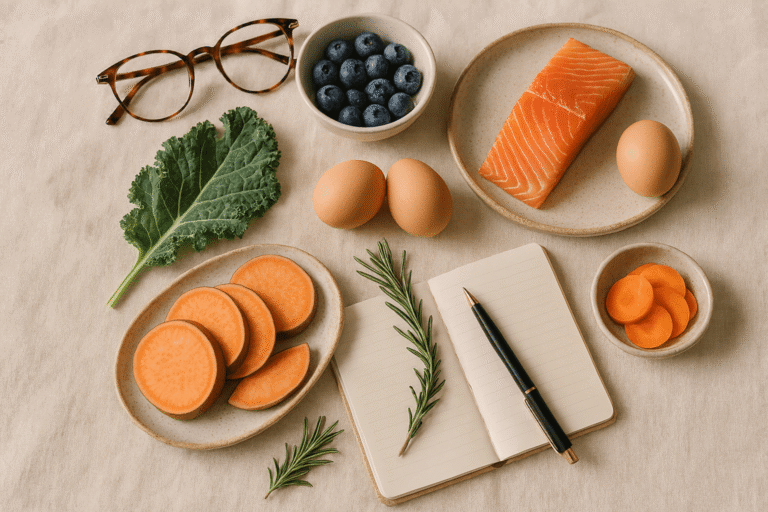
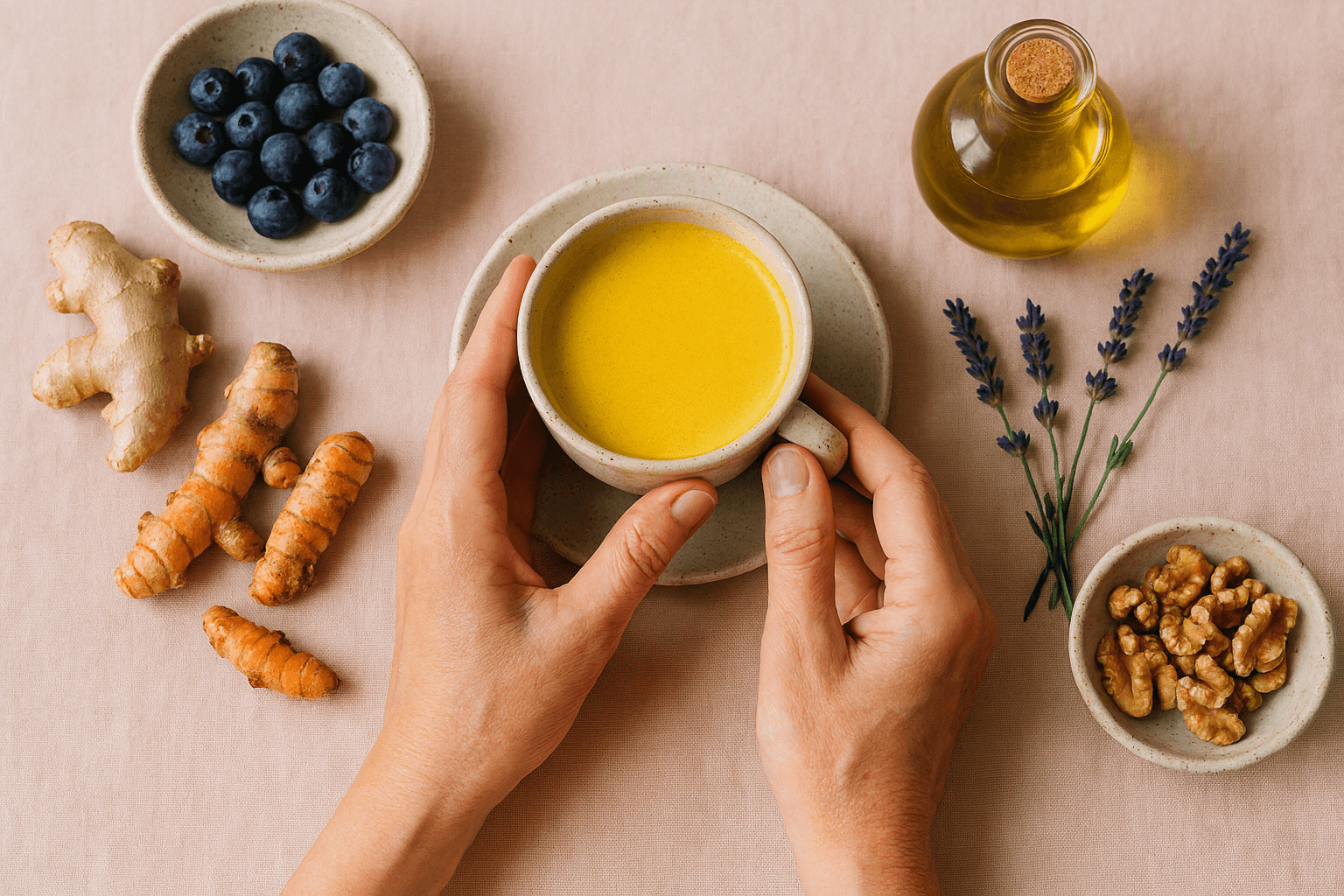
Foods that fight inflammation can dramatically reduce joint pain. Focus on omega-3-rich fish (salmon, sardines), olive oil, berries, leafy greens, walnuts, and turmeric. Avoid the foods that drive inflammation: refined sugar, ultra-processed foods, alcohol, and industrial seed oils. (We covered the full menopause diet plan in our 12 foods to eat & 7 to avoid guide.)
2. Daily Movement (Not Just “Exercise”)
Joints need movement to stay healthy. But high-impact exercise can actually worsen things. The sweet spot for menopausal joints:
- Daily walking (30+ minutes)
- Swimming or water exercise (zero-impact)
- Yoga or Pilates for mobility and stretching
- Gentle strength training (preserves muscle around joints)
- Avoid: heavy running, repetitive high-impact sports
3. Strength Training (Protective for Joints)
Counterintuitively, strength training after 40 is one of the BEST things for joint pain. Strong muscles around the joint stabilize it and reduce stress on the cartilage. Just 2–3 sessions per week of basic strength work makes a difference.
4. Quality Sleep
Your body repairs joint tissue overnight. Poor sleep = poor repair = more pain. Prioritize 7–9 hours, address night sweats and insomnia, and keep your bedroom cool. (See our menopause sleep problems guide for help.)
5. Manage Stress and Cortisol
Chronic stress raises cortisol, which raises inflammation, which worsens joints. Daily walks, breathwork, magnesium, and saying “no” more often all help.
6. Hydrate Adequately
Dehydrated joints = stiff joints. Most women in midlife are mildly dehydrated. Aim for half your body weight in ounces of water daily (so 150 lbs = ~75 oz water).
7. Targeted Supplementation
For many women, lifestyle changes alone aren’t enough — especially if joint pain is already significant. This is where targeted supplements can fill the gap. The key is choosing one specifically designed for midlife and hormonal joint pain, not generic glucosamine products that don’t address the root cause.
The Supplement Category Most Women Don’t Know About
The typical joint supplement aisle is full of generic glucosamine and chondroitin products that were designed decades ago, often for older men with osteoarthritis. They don’t address the hormonal piece of midlife joint pain at all.
That’s why we’ve been recommending Joint Genesis to women asking about joint pain solutions. It’s specifically formulated for midlife joint health and takes a different approach.
What makes it different:
- Contains Mobilee — a clinically-studied compound that restores synovial fluid (the joint’s natural lubricant)
- Includes hyaluronic acid for joint cushioning
- Has anti-inflammatory botanicals targeted at hormonal inflammation
- Designed for daily use (not just “as needed”)
- Made in a GMP-certified facility
- 180-day money-back guarantee (one of the longest in the industry)
Joint Genesis isn’t a miracle pill — no supplement is. But for women who’ve been dismissed by doctors, told it’s “just aging,” or who haven’t found relief from generic joint products, it’s worth knowing about.
Affiliate disclosure: We may earn a commission if you purchase through this link, at no extra cost to you. We only recommend products we’ve researched and would recommend to our own family.
When to See a Doctor
While menopause joint pain is real and common, please see a doctor if you experience:
- Visible swelling, redness, or warmth in a joint
- Pain in ONE specific joint that doesn’t improve
- Joint pain with fever or weight loss
- Severe pain that limits daily activities
- Joint deformity or instability
- No improvement after 3 months of lifestyle changes
These can indicate arthritis, autoimmune conditions, or other issues that need proper diagnosis. A good doctor — ideally one familiar with midlife women’s health — can help you tell the difference and rule out anything serious.
The Mindset That Changes Everything
For too long, midlife women have been told that joint pain is just what happens “as you get older.” That’s both partially true and incredibly misleading.
Yes, joints do change with age. But the dramatic shift many women experience around menopause isn’t “just aging” — it’s hormonal. And what’s hormonal is also addressable.
Women who get serious about anti-inflammatory eating, daily movement, sleep, and targeted supplementation often find that their joints feel better at 55 than they did at 48. That’s not impossible. That’s biology working when you give it the right inputs.
You don’t have to accept “this is just how it is now.” You have agency. And your body — even at 50, 55, 60 — is capable of feeling good again.
Frequently Asked Questions
Does menopause joint pain go away?
For many women, yes — once hormones stabilize in post-menopause and with the right lifestyle support, joint pain often improves significantly. For others, it requires more active management. Very few women are stuck with severe joint pain forever if they address it proactively.
How long until lifestyle changes show results?
Most women notice initial improvements in 2–4 weeks with diet and movement changes. Bigger changes — including from supplements — often take 8–12 weeks of consistency.
Can I take joint supplements with menopause supplements?
Usually yes — they target different mechanisms. Many women take both a menopause multi-support formula and a targeted joint supplement together. Always check with your doctor if you have specific health conditions.
Is exercise safe with menopause joint pain?
Yes — gentle, regular movement is actually one of the best things for it. The key is avoiding high-impact activities while keeping the joints active. Walking, swimming, yoga, and light strength training are ideal.
What’s the difference between joint pain and arthritis?
Menopause joint pain is hormonally driven and often improves with hormone-supportive strategies. Arthritis involves actual joint damage (cartilage loss or autoimmune attack) and may need medical treatment. A doctor can help distinguish between them.
A Final Word
If joint pain has been quietly stealing your quality of life — making walks feel like work, mornings feel hard, and your body feel “old” — please know two things:
First: You are not imagining it. Menopause joint pain is real, biological, and shared by millions of women your age. You’re not weak. You’re not falling apart. You’re hormonal.
Second: You have options. Lifestyle. Movement. Diet. Targeted supplementation. Medical care when needed. Most women who take a multi-layered approach find significant relief — and many find their joints feeling better than they did a few years ago.
Your body still has your back. You just need to listen to what it’s asking for now. 🌸
✦ Editor’s Note ✦
Want to See How This Compares?
If you’re still researching, our complete buyer’s guide breaks down the best supplements for menopause by category — with what to look for, what to avoid, and our honest top picks in each area.
Related reading: Menopause Diet Plan: Foods That Help & Avoid | Strength Training After 40 | Menopause Sleep Problems | Menopause Anxiety
This article is for educational purposes and does not replace medical advice. Always consult with a qualified healthcare provider about your symptoms, especially if you experience persistent or severe joint pain.