Berberine Dosage for Women 40+: How Much, When, and How for Best Results
If you’ve decided to try berberine for menopause insulin resistance, sugar cravings, or stubborn belly fat, you’ve probably realized something frustrating: the right berberine dosage for women isn’t as simple as picking a number off a bottle. Get it wrong and you may see zero results or unpleasant side effects. Get it right and you can experience real metabolic transformation.
After researching the clinical studies, testing different approaches, and specifically evaluating what works for women 40+, here’s the honest practical guide most supplement companies don’t share.
Let’s break down exactly how to take berberine for the best results — and why the delivery method may matter more than the dosage itself.
Quick Answer
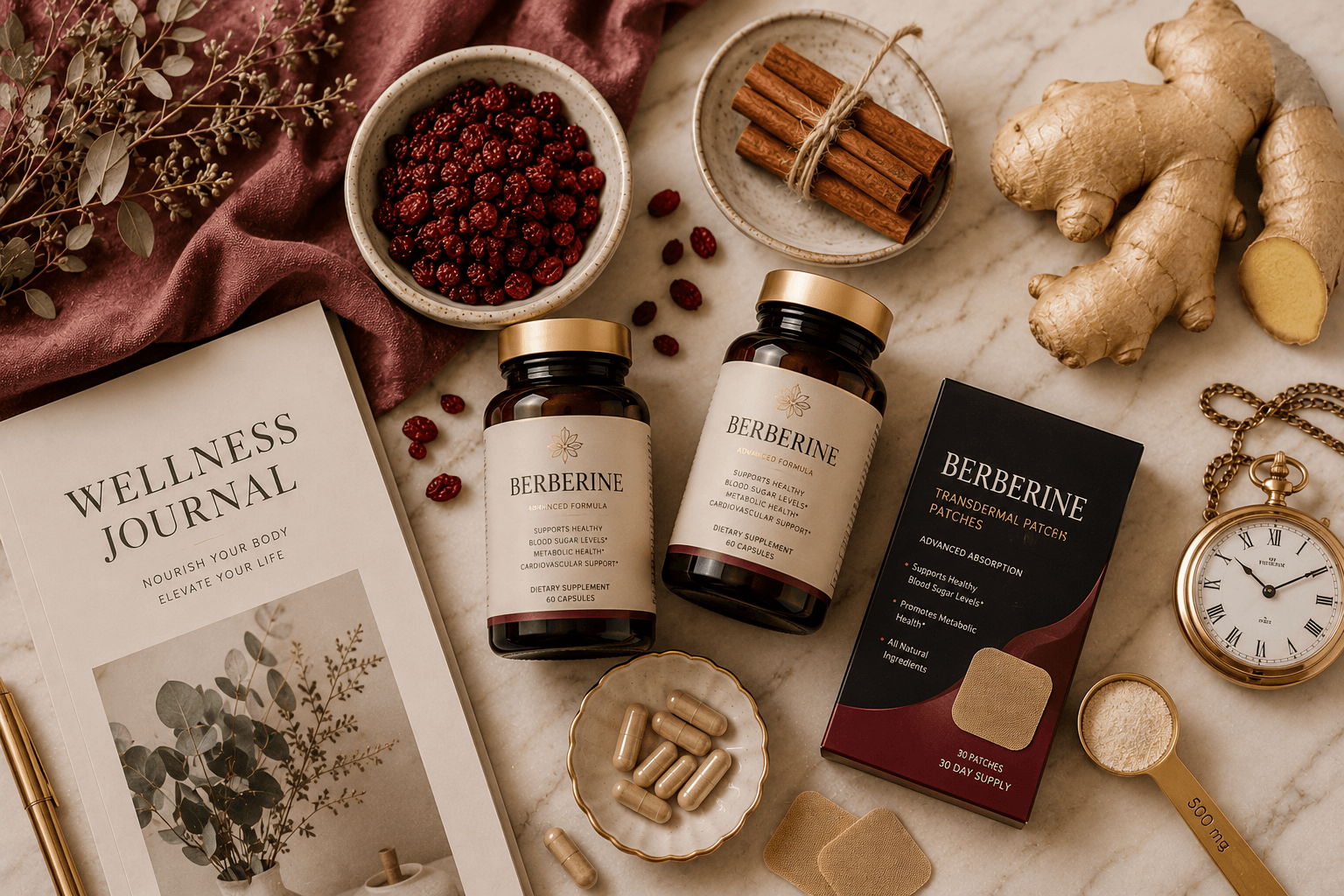
Traditional oral berberine dosage for women: 500mg, 3 times daily with meals (total 1500mg/day)
Modern transdermal berberine (patches): 1 patch daily, applied to skin
Best for absorption: Transdermal patches (bypass digestive breakdown)
How long until results: 2-3 weeks for initial changes, 60-90 days for full effects
Why Berberine Dosage Matters So Much for Women 40+
Berberine works by activating AMPK — a cellular enzyme sometimes called “the metabolic master switch.” When you get the dosage right, this activation produces measurable effects on insulin sensitivity, blood sugar regulation, and metabolic function.
The challenge? Berberine has notoriously poor bioavailability. Studies show only about 5-10% of oral berberine actually enters your bloodstream. This is why dosing is so complicated — you need enough to overcome the absorption problem without triggering digestive side effects.
For women 40+ specifically, this matters even more because menopause insulin resistance requires consistent, effective levels of berberine to actually break through metabolic changes. Read our full guide to menopause and insulin resistance →
The Standard Berberine Dosage for Women (Oral)
Based on clinical research summarized by the National Institutes of Health, the most-studied oral berberine dosage is:
500 mg, three times daily, taken with meals
This totals 1,500 mg daily — the amount used in most studies showing significant effects on blood sugar, weight, and metabolic markers.
Some women can start with a lower dose (250 mg twice daily) to assess tolerance, then work up. This is especially wise if you have a sensitive stomach.
Why Three Doses Per Day?
Berberine has a short half-life in your bloodstream. Taking it three times daily maintains more consistent levels throughout the day — which is when your body actually needs the metabolic support during meals.
Skipping doses or taking it all at once significantly reduces effectiveness. This is one of the main reasons oral berberine often disappoints — many women simply forget the mid-day dose.
When to Take Berberine for Best Results
Timing matters enormously with berberine. Here’s the optimal schedule:
1. With breakfast (500 mg). Sets your metabolic tone for the day and helps stabilize morning blood sugar.
2. With lunch (500 mg). Prevents the afternoon energy crash and helps process the largest meal of the day.
3. With dinner (500 mg). Helps overnight blood sugar stability and prevents 3am cortisol spikes.
Never take berberine on an empty stomach. This dramatically increases the chance of digestive upset (nausea, cramping, diarrhea).
Never take all three doses at once. This wastes most of the berberine (your body can only process so much at once) and increases side effect risk.
A Reality Check
Getting the berberine dosage for women right through oral capsules is hard. Three doses daily, with meals, without skipping — for at least 90 days. Most women drop off by week 3.
This is why transdermal patch delivery has become so popular. One patch daily eliminates dosing complexity while solving the bioavailability problem at the same time.
The Absorption Problem (And How to Solve It)
Here’s the crucial issue every woman researching berberine dosage should understand: oral berberine has terrible bioavailability.
You take 500 mg. Only about 25-50 mg actually reaches your bloodstream. The rest is broken down in your stomach and intestines, causing common side effects like:
- Nausea
- Stomach cramping
- Constipation (or diarrhea)
- Bloating
- Metallic taste
Two modern solutions have emerged to address this:
Solution 1: Dihydroberberine (DHB)
Dihydroberberine is the metabolized form your body naturally converts regular berberine into. Taking DHB directly bypasses the conversion, resulting in 5x better absorption. Effective dose: 100-150 mg twice daily.
Downside: Expensive and quality varies wildly. Look for third-party tested brands only.
Solution 2: Transdermal Patches
Transdermal delivery bypasses the digestive system entirely. Berberine absorbs through the skin over 24 hours, maintaining steady bloodstream levels without pill compliance issues.
This is the format used by Purisaki, which has become one of the most popular berberine delivery methods for women 40+ specifically because it solves the two biggest problems: dosing complexity and absorption failure.
Purisaki Berberine Patches — The Modern Approach
For most women 40+ who want berberine benefits without the dosing complexity, Purisaki Berberine Patches offer the most practical solution.
Simple dosing: One patch daily. Apply in the morning to a clean skin area (inner arm, shoulder, or hip). Rotate application sites.
Steady delivery: Berberine absorbs gradually over 24 hours, maintaining consistent blood levels — something impossible with 3-times-daily oral capsules.
No stomach issues: Bypasses digestion entirely. No nausea, no cramping, no bathroom emergencies.
No compliance problems: Apply once, forget for 24 hours. No mid-day dose to remember.
→ Check Purisaki Berberine on the Official Site
Read our full Purisaki Berberine review →
How Long Berberine Takes to Work
Regardless of delivery format, berberine works gradually. Here’s what to expect:
Week 1-2: Subtle changes in energy stability. Some women notice slightly reduced sugar cravings.
Week 3-4: More consistent blood sugar. Fewer afternoon crashes. Reduced hunger between meals.
Week 5-8: Measurable metabolic changes. Belly fat may start responding to diet efforts. Better response to normal meals.
Month 3+: Full effects. Lab markers (A1C, fasting glucose) often show improvement. Sustained metabolic benefits.
If you don’t see any changes after 90 days of consistent use, either your delivery method isn’t working (oral absorption failure) or berberine isn’t the right tool for your specific pattern.
Berberine Side Effects and Precautions
Berberine is generally well-tolerated, but consider these precautions before starting:
Digestive side effects (with oral): Nausea, cramping, and diarrhea are the most common. Usually resolve within 2 weeks or with dose reduction. Transdermal delivery avoids these.
Drug interactions: Berberine can amplify effects of diabetes medications (metformin, insulin) and blood pressure medications. If you take prescription drugs, consult your doctor before starting.
Cyclosporine interaction: Berberine can interfere with cyclosporine metabolism. Not recommended if you’re on this medication.
Pregnancy and breastfeeding: Not recommended due to lack of safety data.
Cycling recommendations: Some practitioners recommend cycling (3 months on, 1 month off). Others recommend continuous use. Research is mixed. Most women 40+ can safely take berberine long-term.
Combining Berberine with Diet and Exercise
Getting the berberine dosage for women right is only part of the equation. For best results, combine with:
Protein at every meal (25-30g). Berberine works synergistically with adequate protein for blood sugar stabilization.
Walking after meals. Even 10 minutes reduces blood sugar spikes by 20-30% — amplifying berberine’s effects.
Reduced refined carbs. Berberine helps process carbs, but doesn’t magically eliminate them. Less sugar and refined flour = better berberine results.
Strength training 2-3x weekly. Building muscle increases insulin sensitivity, working with berberine mechanism.
Adequate sleep (7-8 hours). Sleep deprivation impairs insulin function, undermining berberine benefits.
Berberine Dosage FAQ
Can I take more than 1500mg daily?
Studies have used up to 2000mg daily, but higher doses significantly increase side effect risk without proportional benefit. Stick to 1500mg unless directed by a healthcare provider.
Should I take berberine on an empty stomach?
No. Always take with meals to minimize digestive side effects and maximize absorption of both berberine and any fat-soluble nutrients.
Can I take berberine with other supplements?
Yes, berberine pairs well with most supplements. Common combinations: berberine + MenoRescue (for menopause), berberine + Sugar Defender (broader blood sugar), berberine + magnesium.
Is berberine safe long-term?
Generally yes for healthy adults. Most research supports safe long-term use in women 40+. Monitor with blood work if you have any concerns.
Do I need to increase dose over time?
No, berberine doesn’t create tolerance the way some substances do. The standard dose remains effective long-term.
Can I stop suddenly?
Yes, berberine doesn’t cause withdrawal. However, stopping may result in gradual return of previous symptoms over 4-6 weeks.
My Honest Recommendation
If you’re willing to commit to 3 doses daily with meals for 90 days without missing, standard oral berberine at 500mg TID works. Buy from a reputable third-party tested brand.
If you want the practical modern solution that solves both the dosing complexity AND absorption problem, Purisaki Berberine Patches are what I’d recommend. One patch daily. No compliance issues. Real absorption. This is what makes berberine actually work for busy women 40+.
Either way, commit to 90 days minimum, combine with the lifestyle basics above, and give your body time to respond. Real metabolic change takes 2-3 months to fully appear.
The Bottom Line
The right berberine dosage for women 40+ depends on your delivery method. Oral requires 1500mg divided into 3 doses with meals. Transdermal simplifies this to one patch daily.
The bigger issue than dosage is bioavailability. Solving that unlocks real results. That’s why more women 40+ are moving to transdermal patches like Purisaki — better absorption, simpler routine, real results.
Related Reading
- Complete Menopause Symptoms Guide (35+ Signs)
- Berberine for Menopause: Complete Guide
- Purisaki Berberine Review: Full Test
- Best Berberine Supplements 2026
- Best Blood Sugar Supplements 2026
- Menopause and Insulin Resistance
- Sugar Defender Review
- Menopause Weight Gain: Why Diets Stop Working
Your Next Steps
Want the practical modern approach? → Read Purisaki Berberine review
Comparing all berberine options? → See Best Berberine Supplements 2026
Understanding the bigger picture? → Read about menopause insulin resistance
Bloom At 40 may earn a small commission when you purchase through our links, at no extra cost to you. We only recommend products we’ve researched thoroughly and believe genuinely help women 40+. This article is for educational purposes and does not replace medical advice from your healthcare provider. If you have diabetes or take diabetes medications, consult your doctor before starting berberine. Thank you for supporting our work.