Hot Flashes: Why They Happen and 7 Natural Ways to Reduce Them
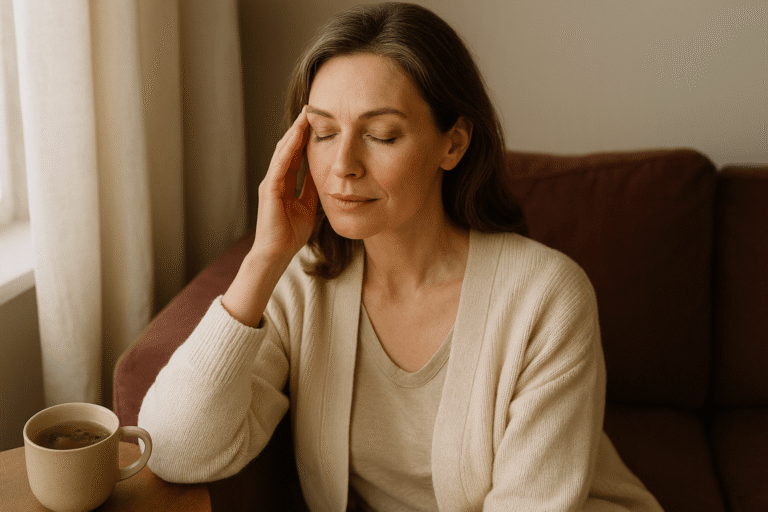
One minute you’re fine. The next, a wave of heat rises from your chest to your face, sweat breaks across your forehead, and you’re frantically fanning yourself with whatever’s within reach — a magazine, a napkin, your own hand.
If you’re a woman in your 40s or 50s, you probably don’t need a definition of hot flashes. You need answers — why they’re happening, how long they’re going to keep happening, and most importantly, what actually helps reduce them.
Up to 75% of women experience hot flashes during perimenopause and menopause. For some, they’re a minor inconvenience. For others, they hijack their sleep, ambush them in meetings, and disrupt their lives for years.
The good news: hot flashes are highly responsive to natural strategies — once you understand what’s actually triggering them. In this guide, we’ll break down what causes hot flashes biologically, and walk you through 7 natural ways to reduce their frequency and intensity that are backed by both research and real-world experience.
What Are Hot Flashes, Really?
A hot flash is a sudden, intense feeling of warmth that spreads through the upper body — usually starting in the chest or face — accompanied by sweating, flushing, and sometimes a racing heart. Most hot flashes last anywhere from 30 seconds to several minutes.
When hot flashes happen during sleep, they’re called night sweats. These are particularly disruptive because they can soak through pajamas and sheets, waking you up multiple times a night and ruining sleep quality for weeks or months on end.
Both hot flashes and night sweats are part of a broader category called vasomotor symptoms — the medical term for symptoms related to blood vessel function and temperature regulation during the menopause transition.
Why Do Hot Flashes Happen?
Hot flashes are driven by changes in your brain’s thermostat — specifically, a region called the hypothalamus.
Here’s how it works in plain language: estrogen plays a key role in helping your hypothalamus regulate body temperature. As estrogen levels decline and fluctuate during perimenopause and menopause, the hypothalamus becomes more sensitive to small changes in body temperature. It misreads normal variations as “you’re overheating!” and triggers a cascade of cooling responses — dilating blood vessels, increasing blood flow to the skin, and activating sweat glands.
The result? A sudden, intense feeling of heat — even though your actual body temperature has barely changed.
Hot flashes typically begin in perimenopause (often years before your final menstrual period), peak around the time of menopause itself, and gradually fade in postmenopause. For most women, they last 4 to 10 years in some form — though some women experience them for shorter periods, and others much longer.
What Triggers Hot Flashes?
While the underlying cause is hormonal, day-to-day triggers can intensify how frequently and severely hot flashes hit. Common triggers include:
- Spicy foods
- Caffeine (especially in the afternoon)
- Alcohol — particularly red wine
- Hot or warm environments
- Stress and anxiety
- Tight clothing or layers that trap heat
- Smoking
- Sugar spikes (large meals, refined carbs)
You don’t have to avoid all of these forever — but identifying your personal triggers is a powerful first step.
7 Natural Ways to Reduce Hot Flashes
Here are seven evidence-supported strategies that genuinely move the needle for most women dealing with hot flashes.
1. Cool Your Environment (and Yourself)
Small environmental shifts make a surprisingly big difference. Try:
- Keeping your bedroom cool at night (65–68°F / 18–20°C is ideal)
- Using a small fan on your nightstand
- Sleeping with moisture-wicking pajamas and breathable cotton sheets
- Dressing in lightweight, breathable layers you can easily remove
- Keeping cold water with you throughout the day
- Using a cooling pillow or pillow protector
These won’t stop hot flashes from happening, but they can dramatically reduce how disruptive they feel when they hit — especially at night.
2. Identify and Manage Your Triggers
For at least one week, keep a simple journal noting:
- What you ate and drank that day
- How much sleep you got the night before
- Your stress level (1–10)
- When hot flashes happened and how intense they were
Within 7–14 days, patterns usually emerge. You might discover that your morning coffee is fine but the afternoon one always sets off a 3 p.m. flush. Or that red wine triggers night sweats more reliably than white wine. Or that high-stress workdays bring waves of flashes you can’t ignore.
Once you know your personal triggers, you can adjust strategically — not eliminate things forever, just reduce or replace them where it matters.
3. Practice Paced Breathing
One of the simplest, most-researched techniques for managing hot flashes is paced breathing — also called paced respiration.
The method: breathe slowly and deeply at a rate of about 6 breaths per minute (instead of the usual 12–16). Inhale through your nose for 5 seconds, exhale through your mouth for 5 seconds.
Practice this for 15 minutes twice a day — morning and evening — to retrain your nervous system. When you feel a hot flash starting, use the same technique to ride it out more calmly. Studies have shown paced breathing can reduce hot flash frequency by up to 40% when practiced consistently.
4. Move Your Body — Especially Strength Training
Regular physical activity is associated with fewer and less severe hot flashes — particularly for women who maintain it consistently over time.
The most effective combination for women over 40:
- Strength training 2–3x per week — preserves muscle mass and metabolic rate
- Daily walking — gentle, cortisol-lowering movement
- Yoga or pilates — supports nervous system regulation
A word of caution: intense exercise (especially when overheated) can occasionally trigger a hot flash. Stay hydrated, work out in cool environments, and let your body adjust over time.
5. Eat More Phytoestrogen-Rich Foods
Phytoestrogens are plant compounds that have mild estrogen-like effects in the body. While they’re not a replacement for your own estrogen, research suggests they can help reduce the frequency and intensity of hot flashes in many women.
Foods rich in phytoestrogens include:
- Soy products (edamame, tofu, tempeh, soy milk)
- Flaxseed (ground, added to oatmeal, yogurt, or smoothies)
- Chickpeas and lentils
- Sesame seeds
- Whole grains (oats, barley)
- Berries and stone fruits
The Cleveland Clinic notes that women who include phytoestrogen-rich foods in their diet often report milder vasomotor symptoms, though individual responses vary. The key is consistency — small daily additions matter more than occasional large servings.
6. Consider Targeted Supplements
Several natural ingredients have research-backed effects on hot flashes specifically. The most promising include:
- Sage leaf — Has been studied for centuries for hot flashes. Modern trials show it can reduce the frequency and intensity of hot flashes and night sweats significantly.
- Ashwagandha — An adaptogen that helps lower cortisol levels. Since stress amplifies hot flashes, calming the stress response often helps.
- Black cohosh — A traditional remedy for menopausal symptoms with mixed but generally supportive evidence.
- Red clover — Contains isoflavones with mild estrogenic activity.
Rather than buying each of these individually, many women find it more effective (and more affordable) to use a targeted menopause supplement that combines several of these ingredients in clinically researched doses.
One option worth considering is MenoRescue, which combines sage leaf, Sensoril ashwagandha, and other clinically supported ingredients in a single daily formula. It was designed specifically for women in perimenopause and menopause, with a focus on the cortisol-symptom connection that drives so many vasomotor symptoms. We did a full MenoRescue review if you want a deeper breakdown of the ingredients and how it works.
As always, talk to your healthcare provider before starting any new supplement, especially if you’re on medication or have a medical condition.
7. Prioritize Sleep — Even When Hot Flashes Make It Hard
This one’s frustrating because hot flashes themselves disrupt sleep — and poor sleep makes hot flashes worse. It’s a vicious cycle that many women feel trapped in.
The way out is to protect sleep where you can:
- Stick to a consistent bedtime and wake time
- Avoid screens 60 minutes before bed
- Keep the room dark, cool, and quiet
- Avoid caffeine after noon
- Limit alcohol — even small amounts disrupt sleep architecture
- Use breathable bedding and moisture-wicking sleepwear
Better sleep lowers cortisol, stabilizes mood, and reduces hot flash intensity. It’s one of the most underrated interventions for menopausal symptoms.
When to Talk to a Doctor About Hot Flashes
For most women, hot flashes are uncomfortable but manageable with the strategies above. However, you should talk to your healthcare provider if:
- Hot flashes are significantly affecting your sleep or quality of life
- They’re accompanied by other concerning symptoms
- They start before age 40
- You’re considering hormone therapy or non-hormonal prescription options
- Natural strategies aren’t providing enough relief after 8–12 weeks
Hormone therapy is one of the most effective treatments for hot flashes — but it’s not the right choice for every woman. A good provider will help you weigh the benefits and risks for your specific situation.
The Honest Truth About Hot Flashes
Here’s what no one tells you: hot flashes are not a sign that you’re doing something wrong. They’re not a sign that your body is failing. They’re the predictable, biological response to one of the most significant hormonal transitions of your life.
That said, you don’t have to suffer through them. The strategies above can dramatically reduce how often and how intensely hot flashes hit — especially when you stack several of them together over time. Most women see meaningful improvement within 4–8 weeks of consistent practice.
If this guide helped you, explore our related articles for more practical, science-backed support:
- The 3 Stages of Menopause: Perimenopause, Menopause & Postmenopause Explained
- 10 Early Signs of Menopause Every Woman Over 40 Should Know
- Menopause Belly: The Real Reason It Happens After 40
- MenoRescue Review 2026: Does It Really Work?
And browse our full Menopause category for more resources on every stage of the journey.
Note: This content is for informational purposes only and is not a substitute for medical advice. Always consult a qualified healthcare provider about your specific situation. For additional medical information on menopause and vasomotor symptoms, see the Cleveland Clinic Menopause Guide.
Affiliate disclosure: This post may contain affiliate links. If you make a purchase through these links, we may earn a small commission at no extra cost to you. We only recommend products we genuinely believe can help women thrive after 40.