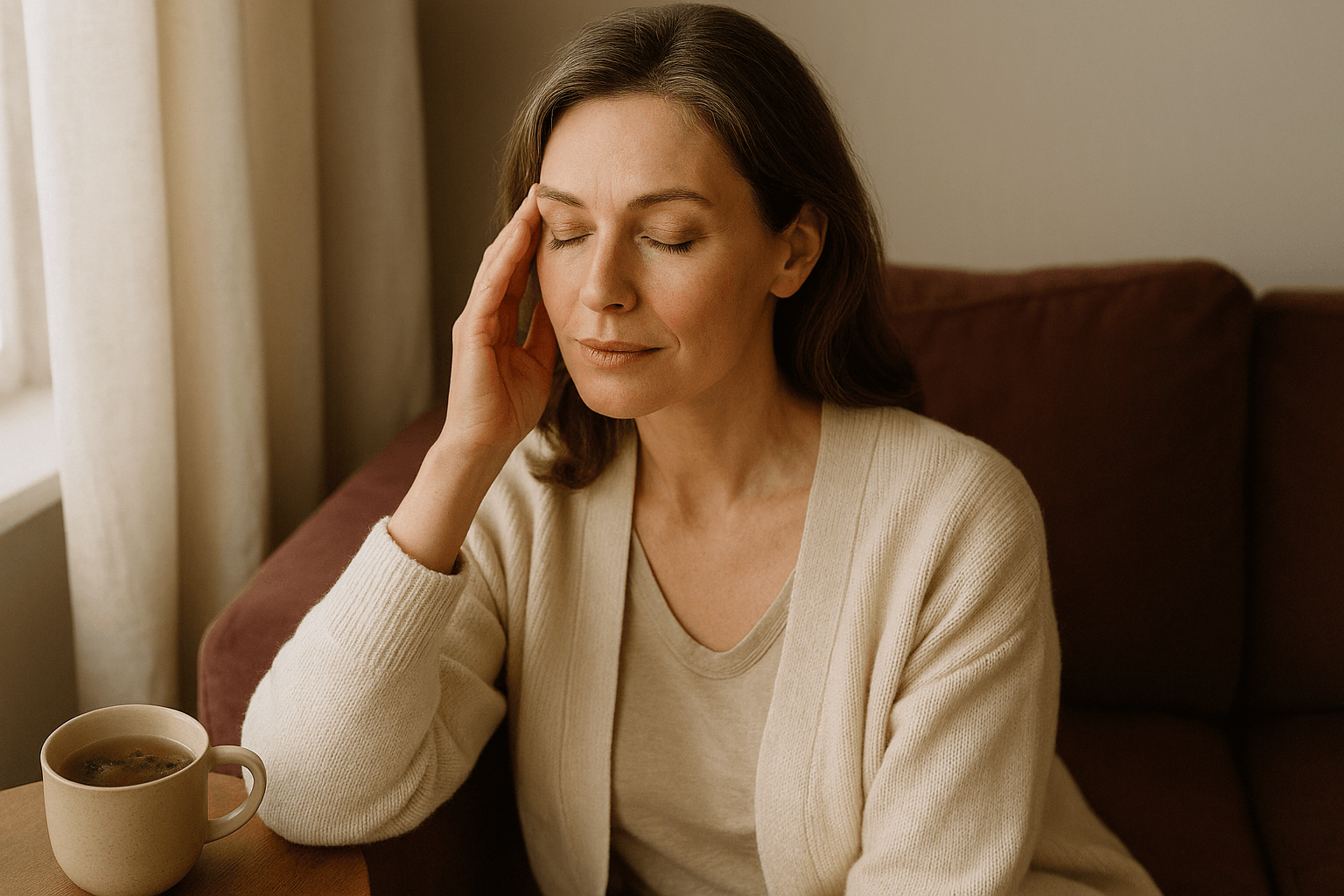
Menopause Migraines: Why They Get Worse After 40 (And What Actually Helps)
You never used to get headaches. Or maybe you got the occasional tension headache, quickly gone with a glass of water and some rest. Then somewhere in your 40s, everything changed.
Now you’re waking up with a dull throb behind your eyes. You’re canceling plans because a migraine is threatening. You’re keeping ibuprofen in your purse, your car, your desk drawer. Some months feel manageable. Others, you lose entire days to head pain that didn’t exist a decade ago.
If this is your reality, you’re dealing with menopause migraines — one of the most underrecognized and undertreated symptoms of the hormonal transition. Here’s what’s really happening, and what actually works.
What Menopause Migraines Really Are
Menopause migraines aren’t just “worse headaches.” They have specific patterns that separate them from stress or tension headaches:
They cluster around hormonal shifts. Many women notice migraines increasing dramatically during perimenopause — the years leading up to menopause — when estrogen levels fluctuate wildly from cycle to cycle. Some women get relief once they reach full menopause. Others don’t.
They can be triggered by things that never bothered you before. Wine that used to be fine now triggers a migraine within hours. Aged cheese, chocolate, artificial sweeteners, or missed meals can suddenly send you to a dark room. Even weather changes hit harder.
They come with symptoms beyond head pain. Nausea, light sensitivity, sound sensitivity, brain fog, dizziness, and sometimes visual disturbances (auras). These aren’t in your head — they’re the neurological signature of true migraine.
According to The North American Menopause Society, about 50% of women with a history of migraines see them worsen during perimenopause. Even women who never had migraines can develop them for the first time in their 40s.
Migraine or Something Else?
Menopause migraines are real, but they’re one of many symptoms with the same hormonal root. If you’re also dealing with hot flashes, insomnia, brain fog, or mood changes, they’re all connected — and often respond to the same interventions.
The Real Cause: Estrogen Withdrawal
Here’s what your doctor may not have explained: migraines during perimenopause are driven by estrogen withdrawal, not high estrogen.
During your reproductive years, estrogen rises and falls predictably each cycle. Your brain adapts to this pattern. But during perimenopause, estrogen levels start swinging wildly — sometimes soaring, sometimes crashing dramatically within days. Every sharp drop triggers a cascade in your brain: blood vessels dilate, inflammatory compounds surge, and neurotransmitters like serotonin drop.
The result? Migraine.
This is why hormonal migraines cluster around specific times: right before your period (when estrogen crashes), during ovulation, or randomly throughout the month as your cycles become irregular.
The Three Hormonal Triggers
Beyond estrogen withdrawal, three other hormonal shifts make migraines worse during menopause:
1. Cortisol dysregulation. As estrogen drops, cortisol tends to rise — especially at night. Elevated cortisol constricts blood vessels, then rebound relaxation triggers migraine. Chronic stress amplifies this cycle.
2. Blood sugar swings. Post-40 insulin resistance means larger blood sugar drops after meals. Low blood sugar is a major migraine trigger. This is why skipping meals hits so much harder now.
3. Histamine intolerance. Estrogen affects histamine metabolism. As estrogen drops, some women develop histamine sensitivity — meaning wine, aged cheese, fermented foods, and even bananas can trigger migraines that would have been fine years ago.
The Thyroid Connection
Here’s something few doctors mention: thyroid dysfunction can trigger or worsen migraines. Both hyperthyroidism and hypothyroidism have been linked to increased migraine frequency.
If your migraines came with fatigue that doesn’t match your sleep, weight changes, cold sensitivity, or dry skin — get your thyroid checked. Supporting thyroid function naturally can reduce migraine frequency for women whose thyroid is part of the picture.
Why Standard Migraine Treatments Often Fail Women 40+
Over-the-counter pain relievers work in the moment but don’t address the underlying trigger. Worse, using them more than 2-3 days per week can cause rebound headaches — a cycle where the medication itself starts causing daily headaches.
Prescription migraine medications (triptans, CGRP blockers) can be effective but come with side effects and don’t work for everyone. And they still don’t touch the hormonal root.
The women who see real improvement address the cause: stabilizing the hormonal environment that’s driving the migraine cascade in the first place.
A Reality Check
Menopause migraines are treatable, but they respond to hormonal support — not just pain management. Expect 60-90 days for real change, and combine supplements with lifestyle basics for best results.
If you’re getting migraines more than 4 days per month, or if they’re severe enough to disrupt work or family life, this is worth taking seriously. You don’t have to just live with them.
The Lifestyle Basics That Matter Most
Before we get to supplements, these changes matter enormously:
Eat protein at every meal. Stabilize blood sugar to prevent the drops that trigger migraines. Aim for 25-30g protein at breakfast, lunch, and dinner. Never skip breakfast.
Track your triggers. Keep a two-week diary noting food, sleep, stress, weather, and hormonal timing. Patterns emerge quickly.
Cut alcohol (especially wine). Red wine especially contains histamine + sulfites + tannins — a migraine trifecta. Even white wine triggers many post-40 women. Try 30 days without and see what happens.
Hydrate consistently. Dehydration is a huge trigger. Aim for at least 2 liters of water daily, especially during the perimenopause.
Sleep 7-8 hours consistently. Both too little and too much sleep can trigger migraines. Wake time matters more than bedtime for stability.
Address stress before it addresses you. The “let-down migraine” that happens on Saturday morning after a stressful week is real. Prevent cortisol whiplash with daily stress management, not just weekend recovery.
Skip magnesium citrate. Try magnesium glycinate. Multiple studies show 400mg daily can reduce migraine frequency. Glycinate is better absorbed and doesn’t cause digestive issues.
The Hormonal Support That Actually Reduces Migraines
Lifestyle helps enormously, but for many women 40+, hormonal support is what finally breaks the migraine cycle. The right supplement addresses the estrogen fluctuations and cortisol dysregulation that drive menopause migraines at the source.
1. MenoRescue — For Hormonal Migraine Cycles
MenoRescue is my top recommendation for menopause migraines because it stabilizes the exact hormonal environment that triggers them. Its formula features Sensoril ashwagandha (clinically shown to lower cortisol by up to 27%) alongside greenselect phytosome and rhodiola — a combination that helps calm the estrogen-cortisol chaos underneath your migraines.
What makes it different: it doesn’t just mask pain. It supports the hormonal balance that prevents the migraine cascade from starting in the first place. Most women notice fewer migraine days by weeks 4-6, with substantial improvement by weeks 8-12.
→ Check MenoRescue on the Official Site
Read our full honest MenoRescue review →
2. Thyrafemme — When Thyroid Is Involved
If your migraines came with fatigue that doesn’t match your sleep, weight changes, or cold sensitivity, thyroid support may be the missing piece.
Thyrafemme supports thyroid function naturally through selenium, tyrosine, iodine, and ashwagandha — nutrients your thyroid needs to produce hormones that regulate energy, metabolism, and neurotransmitter stability (which affects migraine threshold).
→ Check Thyrafemme on the Official Site
Read our full honest Thyrafemme review →
My Honest Recommendation
If your migraines cluster around hormonal timing (before periods, ovulation, or perimenopause chaos), start with MenoRescue. It targets the exact hormonal mechanism (cortisol + estrogen stability) that drives hormonal migraines.
If your migraines came with fatigue, weight changes, or thyroid symptoms, try Thyrafemme first. Address thyroid, and migraines often calm down.
Give either one at least 90 days. Migraine improvement typically shows up in cycles — you might notice a slightly milder migraine week 3, then a skipped one week 6, then noticeably fewer episodes month 3.
What Not to Do
Don’t rely on daily OTC pain relievers. More than 2-3 days per week can cause medication-overuse headaches that become worse than what you started with.
Don’t ignore new patterns. If your migraines suddenly changed character — new location, new severity, new visual symptoms, or new age (first migraine after 50) — see your doctor to rule out other causes.
Don’t dismiss trigger tracking. Most women identify 2-3 major triggers when they keep a diary. Removing those can cut frequency dramatically.
Don’t accept them as inevitable. Menopause migraines respond to intervention. This isn’t a permanent state.
The Bigger Picture
Menopause migraines aren’t your fate. They’re a signal — that your hormonal system needs stabilization support. When you address estrogen withdrawal, cortisol dysregulation, and blood sugar swings together, the migraines calm down. Slowly at first, then more consistently, until you can trust your body again.
You’ve earned your migraine-free days. The path to them exists.
Related Reading
- Complete Menopause Symptoms Guide (35+ Signs)
- Menopause Insomnia: What Actually Helps
- Menopause Night Sweats: Why You’re Waking Soaked
- Brain Fog During Menopause: What Helps
- Best Menopause Supplements 2026: Buyer’s Guide
- MenoRescue Review: An Honest Test
- Thyrafemme Review: Does It Work?
- Menopause Fatigue: The Real Causes
Your Next Steps
If migraines cluster around hormones → Read our full MenoRescue review
If thyroid symptoms are also present → Read our Thyrafemme review
For the complete picture → See our supplements buyer’s guide
Bloom At 40 may earn a small commission when you purchase through our links, at no extra cost to you. We only recommend products we’ve researched thoroughly and believe genuinely help women 40+. This article is educational and does not replace medical advice from your healthcare provider. If your migraines are severe or new, please see a doctor. Thank you for supporting our work.