Menopause and Gut Health: The Overlooked Connection (And What Actually Helps)
Here’s a truth almost no one talks about: menopause changes your gut. Not just occasionally. Not just for some women. Fundamentally, biologically, deeply. The bloating that suddenly appears after meals you’ve eaten for decades. The digestive changes that feel unpredictable. The constipation that started when you turned 45. The food sensitivities that emerged out of nowhere. The way your favorite foods now leave you feeling heavy or uncomfortable. If any of this sounds familiar, you’re not imagining it. You’re experiencing menopause gut health changes that affect the majority of women 40+ — and that almost no one gets told about.
Here’s the frustrating truth: your gut is one of the most estrogen-sensitive systems in your body — and when estrogen declines during perimenopause and menopause, digestion, absorption, microbiome balance, and even inflammation levels all shift. This affects not just digestion, but everything downstream: your skin, your energy, your mood, your weight, your immune system, and even your eye health. Menopause gut health isn’t a niche topic — it’s the missing piece of most midlife wellness conversations.
This guide will break down what’s actually happening to your gut after 40, why the estrogen-gut connection matters so much, the surprising symptoms it drives, and the natural approaches — including our top supplement pick — that address the actual root causes.
Let’s talk about what nobody talks about.
⏱️ IN A HURRY? 30-Second Guide
Your Gut Reset Guide
🌱 If digestion feels harder: Focus on gut barrier support + fiber-rich foods.
👀 If you have gut + eye/skin issues: Address the gut-body axis with targeted plant-based support.
✨ If you want complete gut wellness: Combine anti-inflammatory eating + hormonal support + gut-focused supplementation.
Now let’s break down why — and cover what actually helps.
What’s Really Happening to Your Gut After 40
Your gut isn’t just a food-processing system. It’s a hormone-sensitive, immune-related, brain-connected ecosystem that responds dramatically to the biological shifts of midlife. Here’s what changes:
- Estrogen affects gut motility — When estrogen drops, food moves through your digestive tract slower, causing bloating, constipation, and discomfort.
- Estrogen influences the microbiome — Beneficial gut bacteria decline with hormonal shifts, changing what your body can absorb and how it responds to food.
- The gut barrier weakens — Estrogen helps maintain tight junctions between intestinal cells. When it drops, “leaky gut” becomes more common.
- Inflammation increases — LPS (lipopolysaccharide) toxins can leak from a compromised gut into circulation, triggering systemic inflammation that affects skin, eyes, joints, and mood.
- Cortisol interferes — Elevated stress hormones (common in midlife) further disrupt gut function.
- Sleep disruption compounds — Poor sleep affects gut motility and microbiome balance.
These aren’t independent changes — they cascade. And they explain far more symptoms than most women (or their doctors) realize.
The Surprising Symptoms of Poor Menopause Gut Health
Gut issues don’t just affect digestion. When your gut is compromised, these symptoms often appear elsewhere:
- Bloating — Especially after meals, even healthy ones
- Constipation or unpredictable bowels — Regularity you took for granted disappears
- Food sensitivities — Foods you’ve eaten for years suddenly cause discomfort
- Skin issues — Adult acne, rosacea, eczema flares (gut-skin axis)
- Brain fog — 90% of serotonin is made in your gut; disruption affects mood/clarity
- Fatigue — Poor nutrient absorption drains energy
- Weight resistance — Gut imbalance affects metabolism and cravings
- Mood swings and anxiety — The gut-brain axis is real
- Increased inflammation — Joint aches, headaches, general malaise
- Vision changes — The gut-eye connection is scientifically established
- Immune weakness — 70% of immunity lives in your gut
Notice how many “menopause symptoms” might actually be gut symptoms in disguise? That’s the missing piece.
The Gut-Body Axis: Why Menopause Gut Health Affects Everything
The concept of “the gut affects everything” isn’t wellness marketing hype — it’s established science. Your gut communicates constantly with:
Gut-Brain Axis
Your gut produces 90% of your body’s serotonin (the “happy neurotransmitter”). Poor gut health = mood changes, anxiety, brain fog. This is one reason menopausal women experience so much emotional variability.
Gut-Skin Axis
Gut inflammation triggers skin inflammation. Adult acne, rosacea, and eczema often reflect gut imbalances. External skincare can’t fix issues rooted in your digestive system.
Gut-Eye Axis
Emerging research shows that LPS toxins from a compromised gut can affect eye health, contributing to dry eyes, macular issues, and vision decline. Read more in our vision changes after 40 guide.
Gut-Hormone Axis
Your gut helps metabolize and eliminate estrogen. Poor gut function means estrogen recirculates in problematic ways, worsening menopausal symptoms.
Gut-Immune Axis
70% of your immune system lives in your gut. A compromised gut = weakened immunity, more inflammation, and increased susceptibility to autoimmune conditions (which spike in midlife women).
What Actually Helps: The Gut-First Approach
1. Feed Your Microbiome
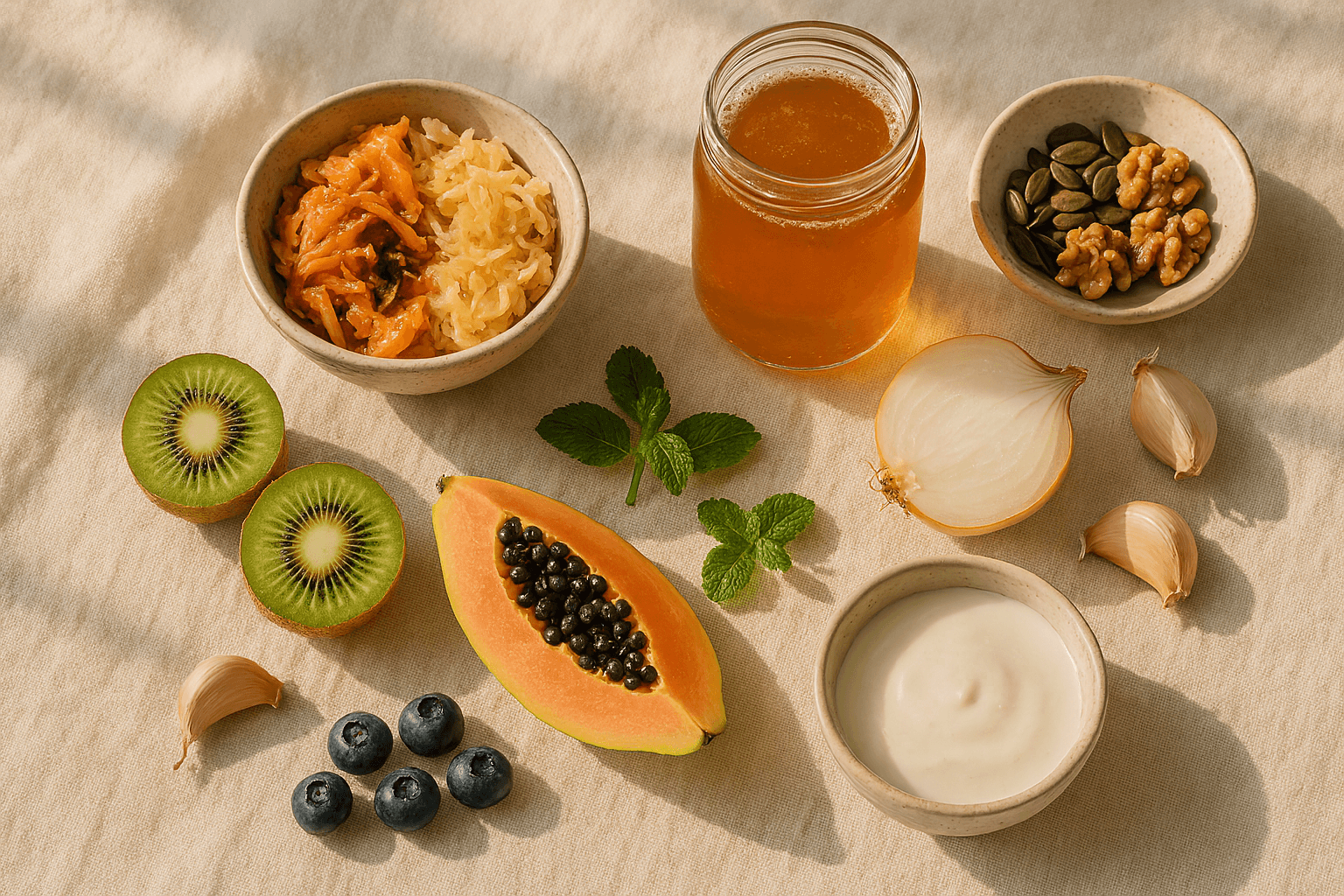
Prebiotic fibers (onions, garlic, leeks, asparagus). Fermented foods (yogurt, kefir, sauerkraut, kimchi). Diverse plant foods (aim for 30+ different plants weekly). Adequate fiber (25-35g daily).
2. Reduce Gut-Disruptors
Ultra-processed foods. Excess sugar. Excessive alcohol. Artificial sweeteners. Unnecessary antibiotics. These damage your microbiome and gut barrier.
3. Support the Gut Barrier
Bone broth (for collagen and amino acids). Omega-3s (reduce gut inflammation). Adequate protein (30g+ per meal for repair). Glutamine (from cabbage, whey, or supplementation).
4. Address Chronic Stress
Cortisol directly damages the gut lining. Daily walks, breathwork, meditation, quality sleep, and boundary-setting all support gut healing.
5. Consider Targeted Supplementation
Some supplements address the gut-body axis directly — supporting both gut function AND downstream benefits (skin, eyes, immunity, hormones). This is where matching the right formula matters.
Our Top Pick for Menopause Gut Health
🏆 Best for Gut-Body Axis Support: Visiflora
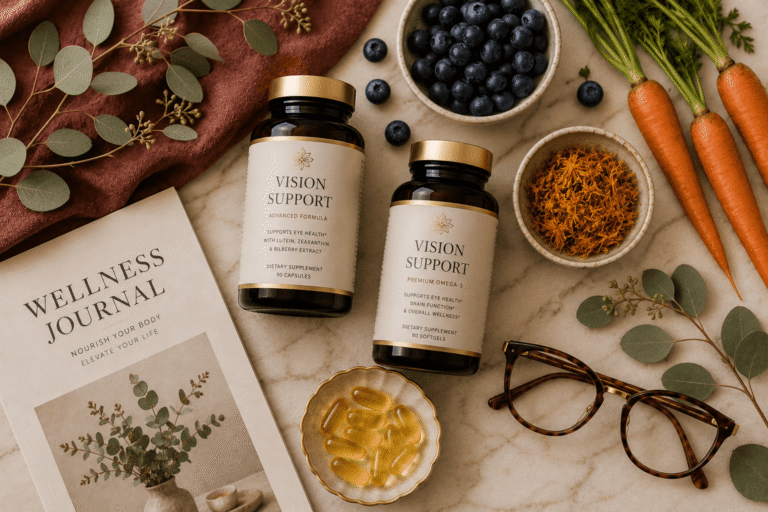
Visiflora is one of the few supplements that directly addresses the gut-body connection. Its 22-in-1 formula includes a dedicated “Gut-Eye Barrier Complex” (Grape Seed Extract + Rutin + Quercetin — the “Gut Armor Trio” from Japanese tradition, plus Taurine to reduce LPS production, plus Alpha Lipoic Acid). This targets the leaky-gut/LPS-toxin pathway that drives inflammation throughout the body. While marketed primarily for vision support, the gut-focused ingredients benefit the entire gut-body axis — including skin, eyes, mood, and immune function.
Read our full Visiflora review here for the detailed breakdown.
🏆 Best for Hormonal Gut Issues: MenoRescue
MenoRescue supports gut function indirectly by addressing the cortisol-hormone chaos that damages gut lining. Its Sensoril® Ashwagandha calms the stress hormone that disrupts digestion. Its phytoestrogens (Red Clover, Black Cohosh) support hormonal balance that affects gut motility. Best if your gut issues come with classic menopause symptoms (hot flashes, mood swings, sleep issues).
Read our full MenoRescue review here for the detailed breakdown.
Affiliate disclosure: We may earn a commission if you purchase through these links, at no extra cost to you. We only recommend products we’ve personally researched and would recommend to our own family.
💡 Reality Check: Gut healing is gradual — real changes typically appear over 8-12+ weeks. Supplements support but don’t replace foundational habits: fiber-rich eating, hydration, stress management, and quality sleep. If you have severe digestive symptoms (persistent pain, blood in stool, dramatic weight loss), consult a gastroenterologist to rule out medical conditions. This is educational information, not medical advice.
Frequently Asked Questions
Why did my gut change during menopause?
Estrogen decline affects gut motility, microbiome composition, gut barrier integrity, and inflammation levels. Your entire digestive ecosystem is estrogen-sensitive — when hormones shift, gut function follows.
Can gut issues cause hot flashes?
Indirectly, yes. Gut dysbiosis affects how your body processes estrogen, which can intensify menopause symptoms including hot flashes, mood swings, and sleep disruption.
How long until gut supplements work?
Some benefits (less bloating, better regularity) can appear in 2-4 weeks. Deeper healing (microbiome balance, inflammation reduction) takes 8-12+ weeks. Consistency matters more than any single choice.
Should I take a probiotic?
For many women, yes — but strain matters. Not all probiotics are equal, and some can worsen symptoms in sensitive individuals. Focus on fermented foods first, and if supplementing, start with well-researched strains.
Can I take Visiflora and MenoRescue together?
Yes — they target different pathways (gut-body axis vs cortisol-hormones) and combine well. See our best supplements for menopause guide for stacking guidance.
If You Had to Start With Just One: Our Recommendation
If you can only start with one supplement, begin with Visiflora. Here’s why:
- Its Gut-Eye Barrier Complex directly addresses the LPS-inflammation pathway that drives so many downstream issues
- Benefits extend beyond digestion — supporting skin, eyes, mood, and immunity
- The 22-in-1 formula provides comprehensive support
- Real research backing for the gut-body axis approach
- Once-daily capsule format is easy to add
The exception: If your gut issues come with intense hormonal symptoms (hot flashes, mood swings, weight gain), start with MenoRescue instead — addressing hormonal chaos often improves gut function significantly.
A Final Word on Menopause Gut Health
Your gut has processed every meal you’ve eaten for four decades. It has faithfully absorbed nutrients, protected you from pathogens, and communicated with every other system in your body. It deserves your attention now — not because something is wrong with you, but because your body is entering a phase where its needs have shifted.
The truth is — menopause gut health is deeply responsive to intentional care. Feed the microbiome. Reduce disruptors. Support the barrier. Calm the cortisol. Try the supplements that address the gut-body axis. And know that when your gut is well, so much else falls into place — skin, mood, energy, immunity, weight, and even vision.
You’re not “just getting older.” You’re entering the phase where your body is asking for a smarter, more integrated approach to wellness. And your gut is one of the wisest places to start.
Bloom on, beautifully. 🌸
✦ Editor’s Note ✦
Want the Bigger Picture?
Gut health is foundational — but there’s more. Our complete guide covers the best supplements for menopause by category — hormones, joints, skin, vision, and more.
Related reading: Vision Changes After 40 | Visiflora Review | Menopause Diet Plan | Best Supplements for Menopause
This article is for educational purposes only and does not replace medical advice. For persistent digestive symptoms, consult a qualified healthcare provider.