Why Your Vision Changes After 40 (And What Actually Helps)
You probably noticed it gradually. The restaurant menu started feeling a little fuzzy. You catch yourself holding your phone farther from your face. Reading the back of a vitamin bottle requires squinting — or worse, your phone’s flashlight. Vision changes after 40 sneak up on most women, and by the time you realize what’s happening, you’re already shopping for “reading glasses” at the pharmacy.
Here’s what nobody told you: those vision changes after 40 aren’t just “getting older.” They’re tied to deeper shifts — hormonal, nutritional, and structural — that you actually have some control over. The earlier you understand what’s happening, the better you can protect your eyes for the decades ahead.
In this guide, we’ll break down what’s really changing in your eyes after 40, why menopause makes it worse (yes, really), the lifestyle factors quietly accelerating it, and the natural approaches that genuinely help — including our top supplement pick at the end.
Let’s protect what matters most.
What’s Actually Happening to Your Eyes After 40
Your eyes are remarkable organs that work overtime every single day. After 40, several biological changes start stacking on top of each other:
- Lens flexibility decreases: The lens of your eye becomes less elastic, making it harder to focus on close objects — this is presbyopia.
- Tear production drops: Glands that keep your eyes lubricated slow down, leading to dry eye syndrome (especially common in menopause).
- Pupil size shrinks: Less light reaches the retina, making low-light vision more challenging.
- Macula thinning begins: The center of your retina, responsible for sharp central vision, starts gradual changes.
- Antioxidant levels fall: Lutein and zeaxanthin — protective pigments in the eye — naturally decline.
- Blood flow to the eyes weakens: Microcirculation in tiny eye vessels becomes less efficient.
Individually, each of these is small. Together? They explain almost every visual complaint women report in their 40s and 50s.
The Most Common Vision Changes After 40
Here are the symptoms most women notice (often dismissing them as “just normal aging”):
- Trouble reading small print — menus, labels, phone messages
- Eye strain by afternoon — especially after screen time
- Dry, itchy, or gritty eyes — often worse in air-conditioned spaces
- Sensitivity to glare — driving at night becomes harder
- Slower focus shifting — moving from screen to distance takes a moment
- Blurred vision after long computer use — “digital eye fatigue”
- Frequent need to adjust lighting — wanting brighter light to read
- Floaters and occasional flashes — small dots drifting across your view
If you’re nodding to most of these — welcome to the club. You’re not imagining it, and you’re not alone. The good news: many of these symptoms respond beautifully to the right nutritional and lifestyle support.
Why Menopause Makes Vision Changes After 40 Worse
Here’s the part most women never hear from their eye doctor: your hormones directly affect your eyes. Estrogen receptors exist in the cornea, lens, retina, and tear-producing glands. When estrogen drops during perimenopause and menopause, every one of those structures is affected.
This is why women report disproportionately more eye issues in their 40s and 50s compared to men of the same age. Specifically:
- Dry eyes intensify: Lower estrogen = reduced tear film stability. Up to 60% of menopausal women experience dry eye symptoms.
- Prescription changes accelerate: Hormonal shifts can change lens shape temporarily, requiring more frequent prescription updates.
- Light sensitivity increases: The cornea becomes more reactive to glare.
- Eye fatigue compounds: Hot flashes and night sweats disrupt sleep, leaving eyes less rested.
- Inflammation rises: Lower hormone levels = higher systemic inflammation, which affects eye tissue.
If your eye changes feel “off” compared to friends in their 30s — there’s a real biological reason. Hormones aren’t just about hot flashes and mood. They affect every single tissue in your body, including your eyes.
Lifestyle Factors Accelerating Vision Decline
Some of what’s happening is biology. But a lot of it is amplified by modern lifestyle factors most women don’t realize are harming their eyes:
- Screen time: The average adult now spends 7+ hours daily on screens. Blue light + reduced blink rate = serious eye strain.
- Sleep deprivation: Eyes repair overnight. Less sleep = less repair.
- Dehydration: Tear film is largely water. Most women are chronically dehydrated.
- Poor diet: Lack of lutein, zeaxanthin, omega-3s, and vitamin A leaves eyes vulnerable.
- Air conditioning & heating: Dry indoor air accelerates tear evaporation.
- UV exposure without sunglasses: Cumulative damage from years of sun exposure.
- Smoking: Massively increases risk of macular degeneration and cataracts.
- Chronic stress: Stress hormones constrict blood vessels — including in the eyes.
The encouraging news? Every single one of these is modifiable. You can absolutely slow — and in many cases reverse — the symptoms of vision changes after 40 by addressing these factors consistently.
What Actually Helps: A Natural Approach
Before reaching for stronger prescriptions or accepting “this is just how it is,” try these evidence-based natural approaches:
1. Feed Your Eyes
Specific nutrients have powerful eye-protective effects:
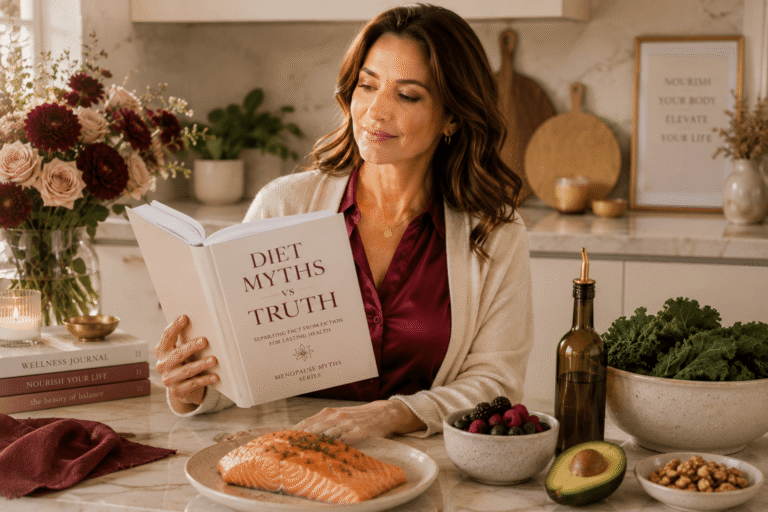
- Lutein & Zeaxanthin — found in kale, spinach, eggs. Protect the macula.
- Omega-3 fatty acids — salmon, sardines, walnuts. Support tear production.
- Vitamin A — sweet potato, carrots, liver. Critical for low-light vision.
- Vitamin C & E — berries, citrus, almonds. Antioxidant protection.
- Zinc — pumpkin seeds, oysters. Helps vitamin A reach the retina.
- Bilberry & blueberries — packed with anthocyanins for microcirculation.
- Astaxanthin — potent antioxidant for eye protection (found in salmon, supplements).
2. Practice the 20-20-20 Rule
Every 20 minutes of screen time, look at something 20 feet away for 20 seconds. This relaxes the focusing muscles and prevents the cumulative strain that triggers most digital eye fatigue.
3. Hydrate Aggressively
Aim for half your body weight in ounces daily. Dry eyes often improve dramatically with proper hydration alone.
4. Protect from Blue Light & UV
Wear quality sunglasses outdoors (UV protection). Consider blue light filters for evening screen time.
5. Sleep Like It’s Your Job
Eyes recover during sleep. 7-8 hours nightly is non-negotiable for long-term eye health.
6. Consider a Targeted Supplement
Diet alone often isn’t enough to deliver the concentrated doses of lutein, zeaxanthin, and antioxidants that aging eyes need. A high-quality eye health supplement can fill the gap that even a perfect diet misses.
Our Top Pick for Vision Changes After 40: Visiflora
After researching the vision health supplement market, Visiflora stands out for women dealing with vision changes after 40. Here’s why it earned our top pick:
- ✅ Plant-based formula — gentle on sensitive midlife systems
- ✅ Multi-ingredient blend — addresses multiple eye health pathways
- ✅ Natural antioxidants — protect against oxidative damage
- ✅ Supports tear production — addresses dry eye specifically
- ✅ Microcirculation support — better blood flow to eye tissues
- ✅ Non-stimulant — won’t disrupt sleep or hormones
- ✅ Made for daily use — designed for long-term eye protection
It’s specifically formulated to address the metabolic and circulatory changes that drive most age-related vision shifts — the exact processes we discussed above. For women looking to be proactive about eye health (rather than reactive once damage is done), Visiflora is one of the most thoughtfully formulated options we’ve come across.
Affiliate disclosure: We may earn a commission if you purchase through this link, at no extra cost to you. We only recommend products we’ve personally researched and would recommend to our own family.
Vision Changes After 40: When to See a Doctor
Most vision changes after 40 are gradual and manageable. But some symptoms warrant a same-week eye exam:
- 🚨 Sudden vision loss or dramatic blurring
- 🚨 Sudden increase in floaters or flashes of light
- 🚨 Eye pain (especially with nausea)
- 🚨 Loss of peripheral (side) vision
- 🚨 Curtain or shadow falling across vision
- 🚨 Persistent double vision
- 🚨 Eye injury of any kind
These can signal serious conditions like retinal detachment, glaucoma flares, or stroke-related issues. When in doubt, get checked. Eyes are not the place to “wait and see.”
For routine care, schedule a comprehensive eye exam every 1-2 years after 40. Many serious eye conditions are painless and symptom-free in early stages — only an eye doctor can catch them.
Frequently Asked Questions
Can vision changes after 40 be reversed?
Some can. Dry eyes, eye strain, and minor focus issues often improve dramatically with nutrition, hydration, and lifestyle changes. Structural changes like presbyopia (lens stiffening) can’t be reversed, but their progression can be slowed.
Why do my eyes feel worse during menopause?
Estrogen affects tear production, lens shape, and corneal sensitivity. As estrogen drops, all three suffer. Up to 60% of menopausal women report new or worsening eye issues — it’s not in your head, it’s in your hormones.
Are supplements actually helpful for eye health?
Yes — the AREDS2 study (gold-standard research) found that specific nutrient combinations significantly reduce risk of vision loss. Look for formulas with lutein, zeaxanthin, omega-3s, and antioxidants.
How long until I see results from eye supplements?
Most women report less eye strain and dryness within 2-4 weeks. Cumulative protective effects build over 3-6 months of consistent use.
Should I take eye supplements with other menopause supplements?
Generally yes — eye health supplements pair well with hormone support and general wellness supplements. See our best supplements for menopause guide for stacking guidance.
Does screen time really damage my eyes long-term?
Excessive screen time causes digital eye strain, dry eye, and accelerated fatigue. Long-term structural damage is less clear, but the daily symptoms are very real. The 20-20-20 rule helps significantly.
A Final Word on Vision Changes After 40
Your eyes have served you well for four decades. They’ve watched you fall in love, hold your babies, navigate every challenge midlife has thrown at you. They deserve more than a shrug and a pair of pharmacy readers.
The truth is — vision changes after 40 aren’t inevitable in their full severity. Yes, biology shifts. But nutrition, lifestyle, hydration, sleep, and targeted supplementation make an enormous difference in how those shifts play out over the next 30+ years of your life.
You’re not “just getting older.” You’re entering a phase where intentional care matters more than ever. Start now — your future self (and your eyes) will thank you.
Bloom on, beautifully. 🌸
✦ Editor’s Note ✦
Building a Full Wellness Routine?
Eye health is one piece of the puzzle. Our complete guide covers the best supplements for menopause by category — hormones, joints, skin, energy, and more.
Related reading: Best Supplements for Menopause | Menopause Diet Plan: 12 Foods That Help & 7 to Avoid | Best Collagen for Women Over 40 | Berberine for Menopause
This article is for educational purposes only and does not replace medical advice. Always consult with a qualified healthcare provider before starting new supplements, especially if you have a chronic condition, take prescription medications, or have any eye conditions.