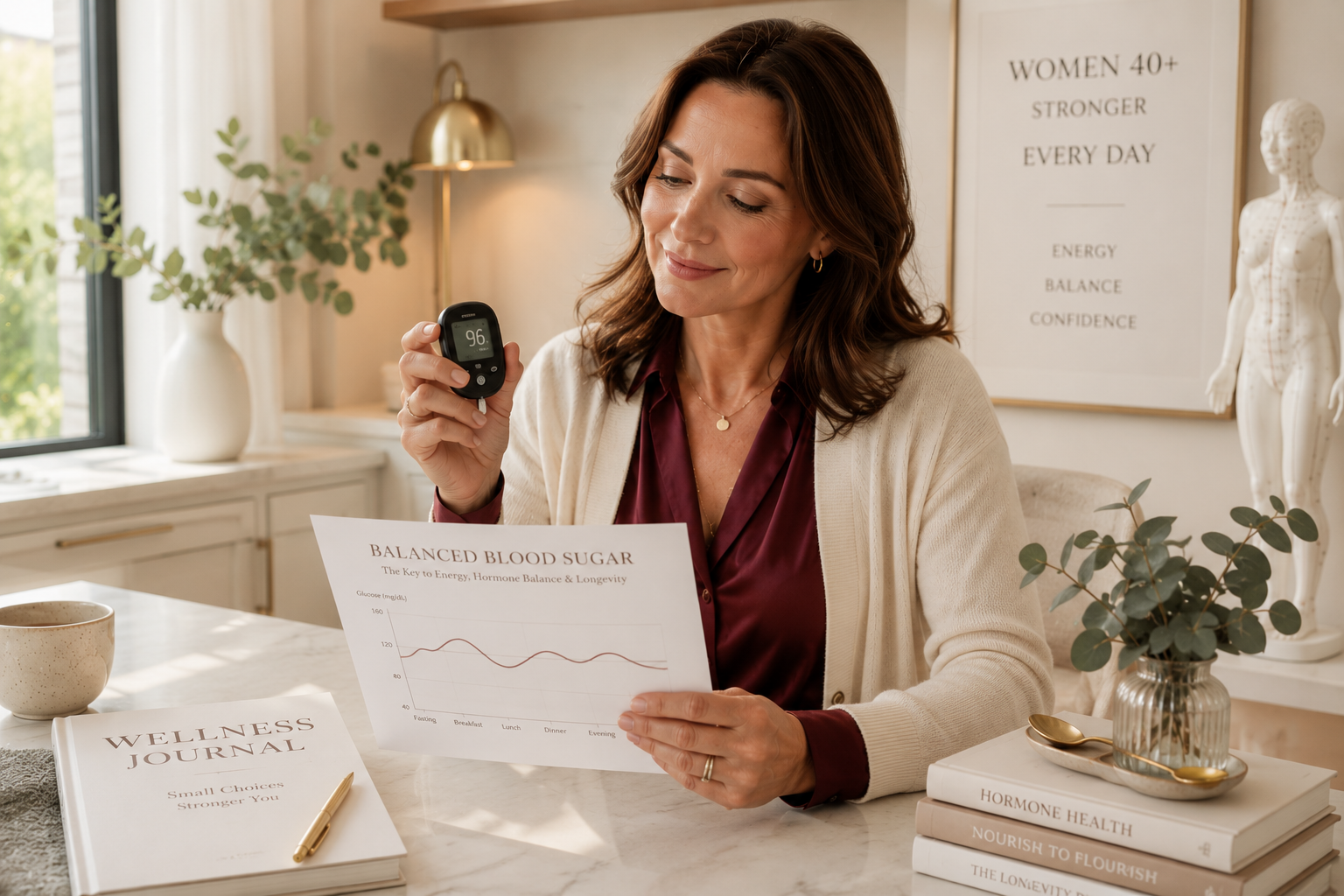
Insulin Resistance in Women Over 40: 10 Signs You Might Have It (And What to Do)
If you’ve been reading about insulin resistance in women over 40 because your body suddenly stopped responding to what used to work — you’re in the right place. This condition affects up to 70% of women during the menopause transition, yet most doctors don’t test for it until it becomes pre-diabetes or full Type 2 diabetes.
By then, it’s much harder to reverse. But caught early — when the warning signs first appear — insulin resistance is highly treatable through lifestyle and targeted natural support.
The problem? Most women don’t recognize the early signs because they seem like “just aging.” Here are the 10 warning signs to watch for, and what to do if you have them.
What Is Insulin Resistance in Women Over 40?
Insulin resistance in women over 40 happens when your cells become less responsive to insulin — the hormone that moves sugar from your bloodstream into your cells for energy. Your pancreas compensates by producing more insulin, keeping blood sugar somewhat normal but creating a cascade of hormonal chaos.
This isn’t diabetes yet. But it’s the metabolic pattern that leads there over months or years if left unaddressed. According to the National Institutes of Health, insulin resistance is now recognized as one of the most common metabolic disorders in women 40+.
The good news: it’s reversible when identified early.
Not Just a Metabolic Issue
Insulin resistance in women over 40 affects nearly every system: energy, mood, weight, skin, sleep, and even brain function. It’s rarely a single-symptom problem.
The 10 Warning Signs of Insulin Resistance in Women Over 40
1. Stubborn Belly Fat That Won’t Budge
You’re doing the same things that used to work — eating reasonably, some exercise — but your midsection is expanding anyway. This is often the first sign. Insulin drives fat storage specifically to the abdomen, creating that “menopause belly” pattern that resists traditional diet approaches.
2. Afternoon Energy Crashes
Around 2-4pm, you hit a wall. You need coffee, sugar, or a nap just to function through the rest of your day. This crash pattern reflects blood sugar dropping too fast after meals — a hallmark of insulin resistance.
3. Intense Sugar and Carb Cravings
Cravings that feel physical, not mental. Chocolate calls to you. Bread suddenly becomes irresistible. These aren’t willpower failures — they’re your body seeking quick blood sugar rescue after crashes. Read our full guide to sugar cravings during menopause →
4. Skin Tags
Small, soft skin growths appearing on your neck, armpits, or eyelids. Skin tags are one of the most under-recognized signs of insulin resistance. Many women have them for years without connecting them to metabolism.
5. Dark Patches of Skin (Acanthosis Nigricans)
Velvety, dark patches appearing behind the neck, in armpits, or in skin folds. This is a strong visual marker of insulin resistance and shouldn’t be ignored.
6. Brain Fog After Meals
You eat lunch and 30-60 minutes later, you’re foggy, tired, and unable to focus. This “food coma” pattern is much more intense with insulin resistance because your blood sugar swings are wider.
7. Frequent Thirst and Urination
You’re drinking more water than usual and running to the bathroom often — especially waking up at night. This happens because your body is trying to flush excess sugar through urine when insulin can’t move it into cells efficiently.
8. Weight Gain Despite Unchanged Eating
The most frustrating sign. You haven’t changed anything, but the scale keeps climbing. Insulin resistance shifts your metabolism to storing rather than burning — even with the same intake. Read about menopause weight gain →
9. Feeling “Hangry” Quickly
If a meal is delayed by 3+ hours, you become intensely irritable, shaky, or unable to think clearly. This reflects poor blood sugar stability — a classic insulin resistance marker.
10. Slow Wound Healing or Frequent Infections
Cuts take longer to heal. You catch every cold going around. UTIs happen more often. Elevated blood sugar impairs immune function and tissue repair, even before diabetes develops.
Why Insulin Resistance in Women Over 40 Is Different
Women in their 40s and 50s face a unique metabolic challenge because of the hormonal shifts of perimenopause and menopause. Four things converge:
Estrogen decline reduces insulin sensitivity. Estrogen directly supports how well your cells respond to insulin. As estrogen drops, cells become resistant even without dietary changes.
Cortisol rises with menopause. Elevated stress hormones increase blood sugar and drive belly fat accumulation. Insulin resistance and cortisol create a vicious cycle.
Muscle mass declines (sarcopenia). Starting in your 30s and accelerating after 40, you lose muscle — the tissue that burns most of the glucose you eat. Less muscle = more circulating sugar = worse insulin resistance.
Sleep quality worsens. Menopause sleep disruption (from insomnia or night sweats) directly impairs insulin function. Even one bad night of sleep measurably reduces insulin sensitivity the next day.
Getting Tested: What to Ask Your Doctor
Standard fasting glucose tests miss early insulin resistance. If you suspect insulin resistance in women over 40 based on the warning signs above, ask specifically for:
Hemoglobin A1C: Shows your average blood sugar over 3 months. Under 5.7 is normal. 5.7-6.4 is pre-diabetes. Over 6.4 is diabetes.
Fasting insulin: Measures how hard your body works to keep blood sugar normal. Under 10 μIU/mL is ideal. Elevated fasting insulin appears years before diabetes.
HOMA-IR: A calculation combining fasting glucose and insulin that estimates insulin resistance directly. Under 1.9 is optimal.
Fasting triglycerides and HDL cholesterol: The ratio of these predicts insulin resistance well. Triglycerides >150 mg/dL with low HDL suggests resistance.
A Reality Check
You don’t need diagnosed pre-diabetes to start addressing insulin resistance in women over 40. If you have several warning signs, the metabolic pattern is already there — and addressing it early is dramatically easier than reversing full diabetes.
Diet and lifestyle come first. Supplements amplify — they don’t replace. Expect 60-90 days for meaningful change when combined properly.
Lifestyle Basics That Actually Work
Protein at every meal (25-30g). Stabilizes blood sugar dramatically. Prevents crashes and cravings. Preserves muscle.
Strength training 2-3x weekly. Not cardio. Muscle is your metabolic insurance. Every pound gained improves insulin sensitivity.
Walk after meals. Even 10 minutes reduces blood sugar spikes by 20-30%. Simplest intervention with biggest impact.
Cut liquid sugar completely. Juice, sweetened coffee drinks, cocktails. These spike blood sugar without any satiety benefit.
Sleep 7-8 hours. Poor sleep alone causes insulin resistance. Non-negotiable.
Time-restricted eating. A gentle 12-14 hour overnight fast (say, 7pm to 9am) improves insulin sensitivity without extreme stress.
Fiber at every meal. Slows blood sugar rise. Berries, greens, chia seeds, avocado.
Targeted Supplements That Support Reversal
For women 40+ dealing with insulin resistance symptoms, two natural supplements consistently deliver real results by addressing different mechanisms:
1. Sugar Defender — Multi-Ingredient Support
Sugar Defender uses 8 natural ingredients including Gymnema (reduces sugar cravings at the taste receptor level), Chromium (essential for insulin function), Ginseng (supports glucose regulation), and adaptogens for the cortisol-insulin connection.
Best for women whose main frustration is cravings + energy crashes + belly fat. Format is sublingual liquid drops in the morning.
→ Check Sugar Defender on the Official Site
Read our full Sugar Defender review →
2. Purisaki Berberine Patches — Direct Blood Sugar Support
Berberine is one of the most-studied natural compounds for insulin sensitivity — often called “nature’s Ozempic.” Purisaki’s transdermal patches solve the poor absorption problem of oral berberine, delivering steady support over 24 hours.
Best for women whose main issue is blood sugar swings + belly fat + slow metabolism. One patch daily, no pills to remember.
→ Check Purisaki Berberine on the Official Site
Read our full Purisaki Berberine review →
My Honest Recommendation
If sugar cravings + belly fat dominate your picture of insulin resistance in women over 40, start with Sugar Defender. The Gymnema addresses cravings directly while the broader formula supports overall insulin function.
If blood sugar instability drives your worst symptoms (afternoon crashes, brain fog, needing carbs to survive), try Purisaki Berberine. Transdermal delivery gives you steady blood sugar support without pill compliance issues.
Give either 60-90 days alongside protein-focused eating and strength training. That combination is what actually reverses insulin resistance in women over 40.
The Bigger Picture
Insulin resistance in women over 40 isn’t a personal failure or a permanent fate. It’s a hormonal shift that responds to intervention — often dramatically so when addressed early.
The warning signs above are your body asking for a different kind of support. When you listen and provide it, your metabolism can absolutely recover. Not to what it was at 25 — but to a version of health that feels sustainable and yours.
Related Reading
- Complete Menopause Symptoms Guide (35+ Signs)
- Menopause and Insulin Resistance: The Hidden Connection
- Sugar Cravings During Menopause: Why They Get Intense
- Menopause Weight Gain: Why Diets Stop Working
- Sugar Defender Review: An Honest Test
- Purisaki Berberine Review: Full Test
- Best Berberine Supplements 2026
- Menopause Diet Plan: 12 Foods That Help
Your Next Steps
If cravings + belly fat dominate → Read our Sugar Defender review
If blood sugar swings are your issue → Read our Purisaki Berberine review
Want the full menopause context → Read about menopause insulin resistance
Bloom At 40 may earn a small commission when you purchase through our links, at no extra cost to you. We only recommend products we’ve researched thoroughly and believe genuinely help women 40+. This article is for educational purposes and does not replace medical advice from your healthcare provider. If you suspect insulin resistance or diabetes, please consult a healthcare professional for proper testing. Thank you for supporting our work.