Menopause Night Sweats: Why You’re Waking Up Soaked (And What Actually Helps)
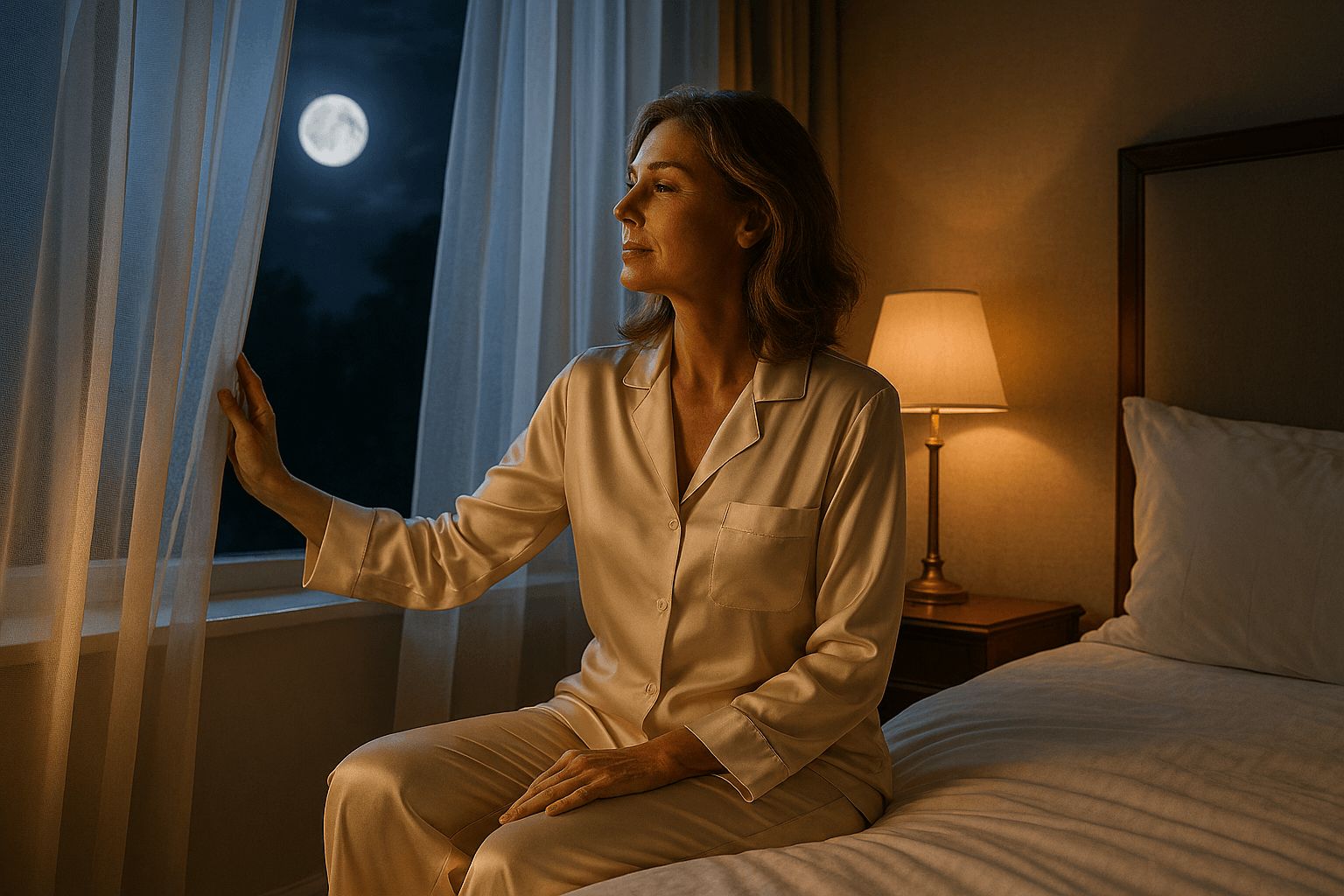
Menopause night sweats have a signature move: you fall asleep normal, and somewhere between 2 and 4 a.m., you wake up soaked. Not damp. Soaked. Sheets stuck to your skin, nightgown drenched, hair matted to your forehead like you just ran a marathon in your sleep.
Then comes the second half: the chill. Cool air hits your wet skin and suddenly you’re freezing, kicking off blankets you’ll want back in twenty minutes. By morning, you’ve done the whole hot-cold cycle three or four times, and any hope of real sleep is long gone.
If this is your nightly routine, you’re not alone — and you don’t have to just accept it. Menopause night sweats have specific causes, and the right approach can actually make them stop. Here’s what’s really happening, and what works.
What Menopause Night Sweats Actually Are
A night sweat is a hot flash that hits while you’re asleep — but calling it “just a hot flash at night” undersells how disruptive it is. During the day, a hot flash is embarrassing and uncomfortable. At night, it destroys your sleep architecture.
The classic pattern: your body temperature spikes 2-4 degrees within minutes. Your brain interprets this as overheating and triggers rapid sweating to cool you down. You wake up drenched. Then the moisture evaporates rapidly, dropping your temperature below baseline. You shiver. You add blankets. You fall back asleep. Then it happens again.
According to The North American Menopause Society, up to 75-80% of women experience hot flashes and night sweats during the menopause transition. For many, they last 7-10 years. Some women have them for over a decade.
This isn’t a minor inconvenience. It’s a nightly assault on your sleep, your relationships (if you share a bed), and your energy the next day.
The Sweat-Insomnia Connection
If you’re waking up drenched AND then unable to fall back asleep, you’re dealing with two overlapping problems: menopause night sweats plus menopause insomnia. They compound each other viciously.
The Real Cause: A Broken Thermostat
Your body has an internal thermostat called the thermoneutral zone — a narrow temperature range your brain considers “comfortable.” Below it, you shiver. Above it, you sweat. In normal life, this zone is wide enough that small fluctuations don’t trigger anything.
Here’s what estrogen decline does: it narrows that zone dramatically. A temperature change so small it wouldn’t have registered before now triggers your full cooling response. Your body treats a 0.5-degree rise as a heat emergency.
Three specific mechanisms are behind this:
1. Estrogen and the hypothalamus. Your hypothalamus (the brain’s temperature control center) is directly regulated by estrogen. When estrogen levels fluctuate wildly during perimenopause and drop during menopause, the hypothalamus becomes hypersensitive to temperature signals.
2. Cortisol dysregulation. As estrogen drops, cortisol tends to rise — especially at night. Cortisol is a stimulating hormone that raises your core temperature. This is why night sweats often peak between 2-4 a.m. when cortisol should be at its lowest.
3. Blood sugar swings. If your blood sugar drops in the middle of the night, your body releases adrenaline and cortisol to bring it back up. Both hormones cause sweating. This is why eating a protein-rich dinner often reduces night sweats.
The Thyroid Connection You Shouldn’t Ignore
Here’s something most women (and even many doctors) miss: an overactive or dysregulated thyroid can mimic menopause night sweats exactly. If your sweats came on suddenly, feel more intense than typical hot flashes, or come with heart palpitations, rapid weight loss, or anxiety spikes — get your thyroid checked.
Even more common: a sluggish thyroid (hypothyroidism) can worsen menopause symptoms including sweats. As thyroid function declines with age, cortisol tries to compensate — and elevated cortisol equals night sweats.
Supporting thyroid function naturally can dramatically reduce sweat frequency for women whose thyroid is part of the picture.
Why Most “Solutions” Don’t Work
You’ve probably tried the standard advice: cooling pillows, moisture-wicking pajamas, keeping the room at 60°F, drinking ice water before bed. These help in the moment — but they don’t stop the sweats from happening.
The reason: cooling strategies address the output (sweat) without touching the trigger (hormonal dysregulation). Your body will keep sweating as long as your hypothalamus keeps misinterpreting temperature signals.
The real fix requires addressing the hormonal cause underneath.
A Reality Check
Menopause night sweats respond to intervention. This is not something you have to just “wait out” for a decade. But quick fixes don’t work — you need to address the underlying hormonal pattern, and that takes 6-12 weeks minimum.
Combining lifestyle basics with the right supplement is what actually changes the game. Neither alone is enough for most women.
What Actually Helps: The Lifestyle Piece
Before we get to supplements, these changes matter enormously:
Cut alcohol, especially wine. Alcohol is the single biggest dietary trigger for night sweats. It disrupts sleep architecture and directly triggers vasodilation (blood vessel expansion) that mimics a hot flash. Even one glass at dinner can trigger a sweat episode.
Protein at dinner (25-30g). This stabilizes overnight blood sugar and prevents the 3 a.m. cortisol spike that triggers sweats. Include options like grilled salmon, chicken, or Greek yogurt.
Skip spicy food after 6 p.m. Capsaicin (the heat in peppers) directly triggers your body’s cooling response. Save the curry for lunch.
Cool the room, then some more. Set your bedroom to 60-65°F. Yes, that cold. Use a fan even in winter. Consider a cooling mattress pad if budget allows.
Manage stress before bed. Elevated cortisol at bedtime = higher likelihood of night sweats. Even 5 minutes of deep breathing or a warm (not hot) bath can help.
Stay hydrated during the day. Not right before bed (bathroom trips wake you), but consistently through the day. Dehydration worsens hot flashes.
The Hormonal Support Piece That Actually Works
Lifestyle helps, but it rarely eliminates night sweats on its own. What actually gets women dry, restful nights is targeted hormonal support that works with your body’s changed reality — not sedation or hormone replacement.
Two supplements consistently show real results for menopause night sweats. Both address root causes rather than just cooling you down after the sweat starts.
1. MenoRescue — The Cortisol-Cooling Formula
MenoRescue is my top recommendation for menopause night sweats because it directly targets the cortisol dysregulation that drives them. Its formula features Sensoril ashwagandha (clinically shown to lower cortisol by up to 27%) alongside greenselect phytosome and rhodiola — a combination specifically designed to calm the stress-heat feedback loop.
What makes it different: it doesn’t sedate you or artificially cool you. It helps your hypothalamus stop misreading temperature signals in the first place. Most women notice fewer night episodes within 3-4 weeks, with dramatic improvement by weeks 6-8.
→ Check MenoRescue on the Official Site
Read our full honest MenoRescue review →
2. Thyrafemme — When Thyroid Is Part of It
If your night sweats came with rapid weight changes, anxiety spikes, or heart palpitations — or if you also have cold hands/feet and fatigue that sleep can’t fix — thyroid support may be the missing piece.
Thyrafemme uses selenium, tyrosine, iodine, and ashwagandha to support natural thyroid function. Balanced thyroid = better cortisol control = fewer night sweats.
→ Check Thyrafemme on the Official Site
Read our full honest Thyrafemme review →
My Honest Recommendation
If your night sweats fit the classic pattern — waking soaked between 2-4 a.m., no obvious external cause — start with MenoRescue. It targets the exact hormonal mechanism (cortisol + thermoregulation) that drives most menopause night sweats.
If your sweats came with heart palpitations, weight changes, or anxiety, try Thyrafemme first — get thyroid working properly, and everything else calms down.
Give either one at least 60 days. The first 2-3 weeks usually show minor reduction; weeks 4-8 are where women often report cutting their sweat episodes by half or more.
What Not to Do
Don’t drink wine “to help you sleep.” It’s the biggest self-sabotage move you can make. Alcohol directly triggers vasodilation and sweat episodes. Cutting it alone can cut night sweats significantly.
Don’t ignore extreme symptoms. If your sweats come with chest pain, extreme weight loss, tremors, or racing heart, see your doctor. Rule out thyroid disease or other causes.
Don’t rely on cooling gadgets alone. Cooling pillows and fans help you survive the moment. They don’t stop sweats from happening.
Don’t accept “this is just menopause.” You’re not supposed to sleep like this for 10 years. Real intervention exists.
The Bigger Picture
Menopause night sweats aren’t a life sentence. They’re a signal — that your hormonal regulation system needs recalibration. When you address the root (cortisol + thermoregulation + thyroid), the sweats calm down. Not overnight. But over weeks, in a way that’s real and lasting.
You deserve to sleep dry. You deserve to wake up feeling like yourself. The path exists.
Related Reading
- Complete Menopause Symptoms Guide (35+ Signs)
- Menopause Insomnia: What Actually Helps
- Hot Flashes: Natural Remedies That Actually Work
- Menopause Fatigue: The Real Causes
- Best Menopause Supplements 2026: Buyer’s Guide
- MenoRescue Review: An Honest Test
- Thyrafemme Review: Does It Work?
- Menopause Weight Gain: Why Diets Stop Working
Your Next Steps
If you’re waking soaked at 3 a.m. → Read our full MenoRescue review
If thyroid feels involved → Read our Thyrafemme review
For the complete symptom picture → See our full buyer’s guide
Bloom At 40 may earn a small commission when you purchase through our links, at no extra cost to you. We only recommend products we’ve researched thoroughly and believe genuinely help women 40+. Thank you for supporting our work.