Menopause Diet Plan: 12 Foods That Help & 7 to Avoid
If you’ve ever stood in front of the refrigerator at 8pm thinking “I don’t know what to eat anymore” — welcome to one of the most disorienting parts of midlife. Suddenly, the foods that used to make you feel fine now make you feel bloated. The breakfast that fueled you for years now leaves you tired by 10am. And the “healthy” choices you trusted are quietly making your menopause symptoms worse.
Here’s what nobody tells you: your body’s nutritional needs change dramatically after 40. The way your metabolism handles carbs, the way your liver clears excess estrogen, the way your gut absorbs nutrients — all of it shifts. And without a thoughtful menopause diet plan, you’ll keep eating like the woman you were 10 years ago and wondering why nothing feels right.
The good news? Food is one of the most powerful tools you have. The right foods can:
- Reduce hot flashes by 30%+ (studies show)
- Stabilize mood and energy throughout the day
- Support liver clearance of excess estrogen
- Prevent that stubborn menopause belly fat
- Improve sleep quality dramatically
- Reduce joint pain and inflammation
This guide walks you through the 12 foods that genuinely help women in perimenopause and menopause — plus the 7 foods that are quietly making your symptoms worse. No restrictive diets, no impossible rules. Just smart, sustainable food choices that work with your changing body.
Why Diet Matters More After 40
Before we get to the food lists, let’s quickly understand why what you eat matters so much more now than it did at 30. Three key shifts happen:
1. Estrogen Drops Change Fat Storage
Estrogen affects where your body stores fat. As estrogen declines, fat shifts from hips and thighs to the belly — a more inflammatory and metabolically harmful pattern. Diet directly affects whether this shift accelerates or slows.
2. Insulin Resistance Increases
Women in midlife become more insulin-resistant — meaning carbs that used to be “fine” now spike blood sugar and store as fat more readily. This is why low-carb-style eating often helps menopausal women specifically.
3. Inflammation Rises
Lower estrogen = less of estrogen’s natural anti-inflammatory effects. Foods that drive inflammation (processed sugar, ultra-processed snacks, vegetable oils) hit harder now. Foods that fight inflammation (omega-3s, polyphenols, fiber) help more than ever.
Bottom line: the same diet that “worked” at 30 may now be working against you. Let’s fix that.
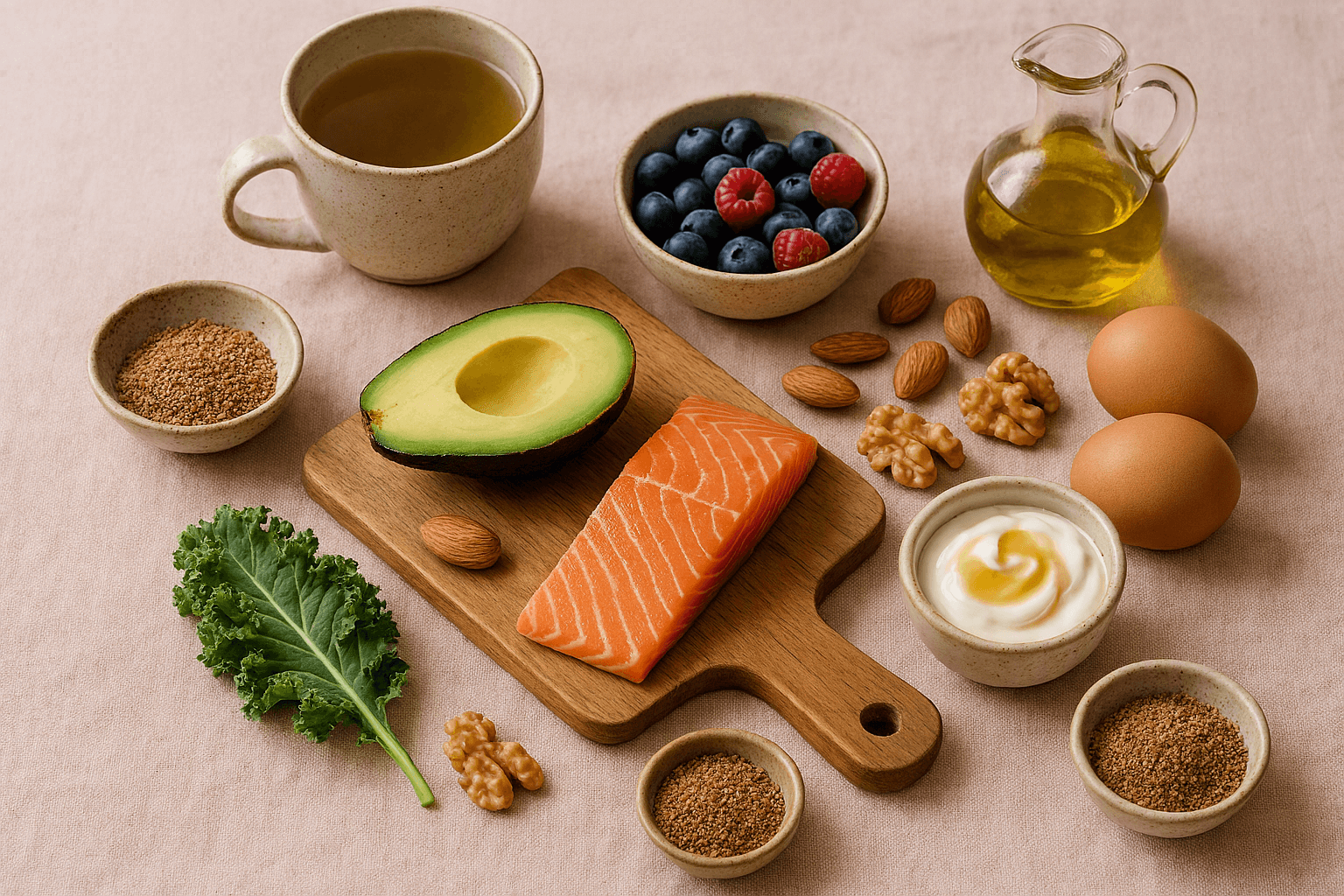
✨ 12 Foods to ADD to Your Menopause Diet Plan
1. Flax Seeds (Ground)
Why: Highest food source of lignans — plant compounds that gently mimic estrogen activity. Studies link 1–2 tablespoons of ground flax daily to reduced hot flashes and improved hormonal balance.
How to use: Sprinkle 1–2 tbsp ground flax on yogurt, oatmeal, salads, or smoothies daily. Must be ground — whole flaxseeds pass through undigested.
2. Wild-Caught Salmon (or Sardines)
Why: Rich in omega-3s (EPA & DHA) — the most potent anti-inflammatory fats. Omega-3s reduce hot flashes, support brain health, and help with mood. Salmon also provides high-quality protein for muscle maintenance.
How to use: Aim for 2–3 servings per week. Sardines are budget-friendly and even higher in omega-3 per gram.
3. Cruciferous Vegetables (Broccoli, Cauliflower, Kale, Brussels Sprouts)
Why: Contain DIM (diindolylmethane) and sulforaphane — compounds that support your liver in clearing excess estrogen. This is HUGE for symptom management during perimenopause when estrogen levels fluctuate wildly.
How to use: Aim for 1–2 servings daily. Roast, steam, or sauté — raw is fine too, but cooked is gentler on the gut.
4. Berries (Blueberries, Raspberries, Strawberries)
Why: Loaded with antioxidants (anthocyanins) that fight inflammation and protect against cognitive decline. Low glycemic, so they don’t spike blood sugar like other fruits.
How to use: ½ to 1 cup daily — fresh or frozen both work. Great with Greek yogurt or as a snack.
5. Greek Yogurt (Full-Fat, Unsweetened)
Why: Probiotics for gut health (critical for hormone clearance), high protein for muscle preservation, and calcium for bone health — all top priorities after 40.
How to use: ¾ cup daily. Full-fat is better than low-fat for menopausal women — fat helps with hormone production and satiety.
6. Avocado
Why: Monounsaturated fats stabilize blood sugar, support hormone production, and improve satiety. Avocados also provide magnesium (most women are deficient) and fiber.
How to use: ¼ to ½ avocado daily — on toast, in salads, in smoothies, or with eggs.
7. Lentils & Chickpeas
Why: Phytoestrogens (gentle estrogen support), plus high fiber for blood sugar control and gut health. Plant protein that’s lower in saturated fat than red meat.
How to use: 3–4 servings per week. Add to soups, salads, hummus, curries.
8. Eggs
Why: Complete protein (essential for maintaining muscle as you age), choline (brain health), vitamin D, and B12. Eggs were demonized for decades — the science now says they’re a near-perfect food for women 40+.
How to use: 1–3 eggs daily. Pair with greens and a healthy fat for the perfect menopause breakfast.
9. Extra Virgin Olive Oil
Why: Polyphenols that fight inflammation, monounsaturated fats for heart health (women’s heart disease risk rises after menopause), and oleocanthal — a natural anti-inflammatory compound.
How to use: 1–2 tablespoons daily. Use raw on salads or to drizzle over cooked foods. Avoid high-heat cooking with delicate olive oils.
10. Nuts & Seeds (Almonds, Walnuts, Pumpkin Seeds)
Why: Magnesium for sleep and mood, healthy fats for hormone production, vitamin E for skin and brain. Walnuts especially are rich in plant-based omega-3s.
How to use: ¼ cup daily — as snacks, on yogurt, in salads. Watch portion sizes (calorie-dense).
11. Sweet Potatoes
Why: Complex carbs that don’t spike blood sugar like white potatoes or refined grains. High in beta-carotene (skin health), potassium, and fiber. The right carb for menopausal women who do well with some carbohydrates.
How to use: ½ to 1 cup, 3–4 times per week. Roast, bake, or steam. Pair with protein and fat to slow absorption.
12. Green Tea
Why: EGCG (a polyphenol) supports metabolism, fights inflammation, and protects brain function. L-theanine in green tea provides calm-alert energy without the cortisol spike of coffee.
How to use: 2–3 cups daily. Especially helpful for women who feel jittery on coffee but still want energy.
🚫 7 Foods to AVOID (or Minimize) in Your Menopause Diet Plan
You don’t have to give these up entirely — but reducing them dramatically helps most women feel significantly better within 2–4 weeks.
1. Refined Sugar & Sweets
Why avoid: Spikes insulin, drives belly fat storage, fuels inflammation, worsens mood swings, disrupts sleep. The worst single food for menopause symptoms.
Swap with: Berries, a square of dark chocolate (70%+), or a date with almond butter when cravings hit.
2. Ultra-Processed Carbs (White Bread, Crackers, Pastries)
Why avoid: Same blood sugar issues as sugar, plus they crowd out nutrient-dense foods. Ultra-processed = ultra-inflammatory.
Swap with: Sourdough, sprouted grain breads, or oats. Stay away from “low-carb” packaged products too — they often have other inflammatory ingredients.
3. Alcohol (Especially Wine in the Evening)
Why avoid: Triggers hot flashes, disrupts sleep architecture (even 1 glass), depletes B vitamins, and burdens the liver — which is already working overtime to clear hormones during menopause.
Swap with: Sparkling water with lime, kombucha, or non-alcoholic options on most nights. If you drink, do it earlier in the day and limit to 1 drink.
4. Industrial Seed Oils (Soybean, Corn, Canola, Sunflower)
Why avoid: High in omega-6 fats that drive inflammation. Found in most processed foods, salad dressings, and restaurant cooking. They throw off your omega-3 to omega-6 ratio dramatically.
Swap with: Olive oil, avocado oil, grass-fed butter, coconut oil for higher-heat cooking.
5. Conventional Dairy (For Some Women)
Why avoid: Not everyone — but many menopausal women find that conventional dairy worsens bloating, joint pain, and inflammation. Often, it’s the lactose or A1 casein causing issues.
Try this: Eliminate for 21 days and see how you feel. If you tolerate dairy fine, full-fat from grass-fed sources (Greek yogurt, kefir, cheese) is best.
6. Caffeine (After 12pm)
Why avoid: Triggers hot flashes, worsens anxiety, and stays in your system for 6–8 hours. After 40, your liver clears caffeine more slowly — so afternoon coffee can absolutely affect sleep at midnight.
Swap with: Cut off coffee at noon. Switch to green tea, matcha, or herbal tea for afternoon energy.
7. “Diet” Foods with Artificial Sweeteners
Why avoid: Aspartame, sucralose, and most artificial sweeteners disrupt the gut microbiome — which directly affects hormone clearance, mood, and weight. The “calorie-free” label is a trap.
Swap with: Stevia, monk fruit, or just less sweetness overall (your taste buds adapt within 2 weeks).
📅 Sample Day on a Menopause Diet Plan
Here’s what a real, achievable day might look like:
Breakfast (within 1–2 hours of waking)
2 eggs scrambled in olive oil + ½ avocado + handful of spinach + ½ cup berries
Lunch
Large salad with grilled salmon, kale, chickpeas, walnuts, olive oil + lemon dressing
Afternoon Snack (if needed)
Greek yogurt with ground flax and a few berries
Dinner
Roasted chicken thigh + roasted Brussels sprouts + small sweet potato with butter
Evening (if hungry)
Herbal tea + a few squares of 70%+ dark chocolate
That’s it. Not complicated. Not restrictive. Just real food, in real amounts, designed for what your body needs now.
When Diet Isn’t Quite Enough
For most women, dialing in nutrition produces noticeable improvements in 4–6 weeks. But some symptoms — especially stubborn belly fat, persistent hot flashes, and resistant weight gain — sometimes need an extra layer of support beyond food alone.
If you’ve been eating clean for 6+ weeks and your menopause weight gain still isn’t budging, that’s often a sign that your metabolism needs targeted support. Hormonal shifts (especially the cortisol-insulin pattern in midlife) can make weight loss feel impossible no matter how clean you eat.
This is when a metabolism-supportive supplement like CitrusBurn can fill the gap. It’s formulated specifically for midlife metabolism — not generic fat burners — and works with your diet, not instead of it. (You can read our full CitrusBurn review here.)
For a complete breakdown of which supplements actually help during menopause, check our buyer’s guide to the best supplements for menopause.
Frequently Asked Questions
How long until I see results from a menopause diet plan?
Most women notice better energy and reduced bloating within 1–2 weeks. Sleep improvements often come in week 2–3. Weight changes typically show by week 4–6. Mood and hot flash improvements vary but often appear by week 3.
Is intermittent fasting good for menopausal women?
It depends. Gentle approaches (12–14 hour overnight fasts) work well for many women. Aggressive fasting (16+ hours daily) can spike cortisol in some menopausal women and worsen symptoms. Start gentle and listen to your body.
Do I need to count calories on a menopause diet plan?
Usually not. Focus on food quality and protein/fiber/healthy fat ratios. Most women naturally eat less when they’re eating real foods that satisfy hunger properly.
What about plant-based diets during menopause?
They can work beautifully if done thoughtfully. Pay extra attention to protein (aim for 80–100g daily), omega-3s (algae oil, flax, chia), B12, iron, and calcium. Many plant-based women in menopause feel best including some eggs or fish.
What’s the single most important food change I can make?
If you change one thing: cut refined sugar dramatically. Most women notice clearer thinking, more stable mood, and less belly bloat within 7–10 days of significantly reducing sugar.
A Final Word
Food during menopause isn’t about deprivation. It’s about recalibration. Your body is asking for different things now — more protein, more healthy fats, more colorful plants, fewer ultra-processed shortcuts. When you meet those needs, your body responds.
You don’t need to be perfect. You need to be consistent. Aim for 80% of your meals built around the 12 foods above, minimize the 7 to avoid, and stop apologizing for taking care of yourself.
This isn’t about being smaller. It’s about being stronger, clearer, and more comfortable in the body you have right now. You deserve every meal that makes you feel like yourself again. 🌸
✦ Editor’s Note ✦
Want to See How This Compares?
If you’re still researching, our complete buyer’s guide breaks down the best supplements for menopause by category — with what to look for, what to avoid, and our honest top picks in each area.
Related reading: Menopause Belly: The Real Reason It Happens | Weight Loss After 40: Real Strategies That Work | CitrusBurn Review | Menopause Sleep Problems
Affiliate disclosure: This post may contain affiliate links. If you make a purchase through these links, we may earn a small commission at no extra cost to you. We only recommend products we genuinely believe can help women thrive after 40.
This article is for educational purposes and does not replace medical advice. Always consult with a qualified healthcare provider before making major dietary changes, especially if you have a chronic condition.