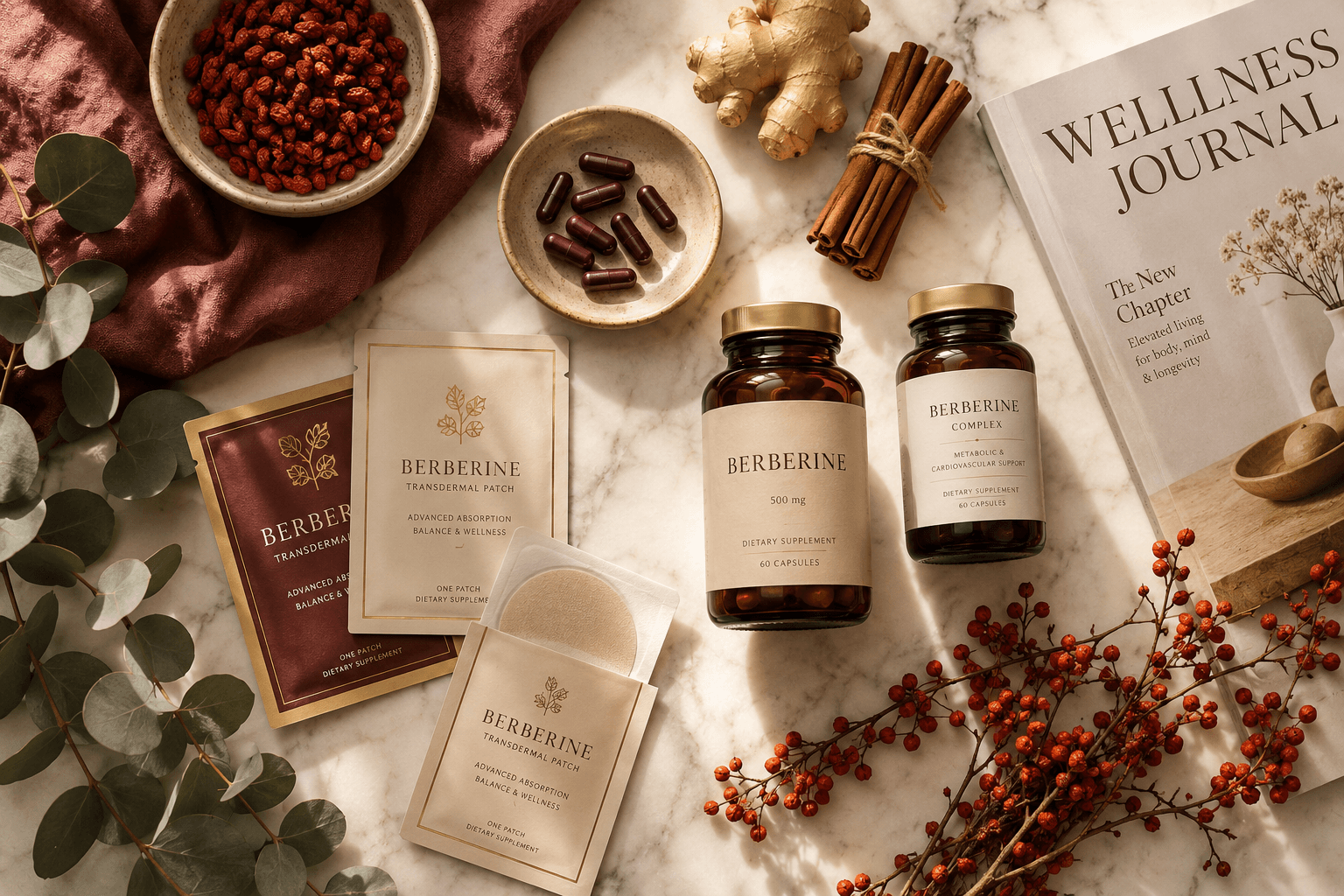
Best Berberine Supplements 2026: An Honest Buyer’s Guide for Women 40+
If you’ve been researching berberine for menopause weight gain, blood sugar swings, or post-40 metabolic changes, you’ve probably run into the same frustration I did: the best berberine supplements are surprisingly hard to identify.
The supplement industry has flooded the market with berberine capsules that look identical on paper but perform dramatically differently in real bodies. Some are underdosed. Some use the cheapest berberine form (barely absorbed). Some are just repackaged multivitamins with a berberine label.
After testing, researching, and reviewing options for the past year — and specifically evaluating what works for women 40+ dealing with the metabolic shifts of perimenopause and menopause — here’s what actually delivers in 2026.
Quick Decision Guide
Not sure where to start? Here’s the shortcut:
→ Best overall (bioavailability + convenience): Purisaki Berberine Patches
→ Best for blood sugar spikes: Purisaki Patches (steady 24hr release)
→ Best for stubborn belly fat: Purisaki + protein-first eating
→ Cheapest option: Generic oral berberine 500mg (works, but harder on stomach)
→ Want the full menopause picture? See our complete supplements guide
Why Berberine Matters for Women 40+
Berberine is a plant compound extracted from herbs like barberry, goldenseal, and Oregon grape. It’s been used in traditional Chinese and Ayurvedic medicine for centuries, and modern research has confirmed what practitioners always knew: it dramatically supports blood sugar regulation, insulin sensitivity, and metabolic function.
For women in their 40s and 50s, this matters more than ever. Here’s why:
Insulin resistance rises with age. Even without diabetes, most women develop some level of insulin resistance after 40. This is why you can eat the same foods as your husband and gain weight. Berberine helps your cells respond to insulin properly again.
Blood sugar swings drive weight gain. Sharp glucose spikes and crashes trigger cortisol release, fat storage, and cravings. Steadying blood sugar breaks the cycle.
Belly fat responds specifically. Berberine has been shown in studies to preferentially reduce visceral (belly) fat — exactly the type that becomes prominent during menopause.
Metabolism gets a real boost. Berberine activates AMPK (an enzyme sometimes called the “metabolic master switch”) that improves how your cells produce and use energy.
According to research summarized by the National Institutes of Health, berberine has been called “nature’s Ozempic” for good reason — but only when it’s actually absorbed by your body.
The Berberine Bioavailability Problem
Here’s the crucial issue almost nobody talks about: oral berberine has terrible bioavailability.
When you swallow a berberine capsule, only about 5-10% actually makes it into your bloodstream. The rest gets broken down in your digestive tract, causing common side effects like nausea, constipation, or diarrhea, without delivering the metabolic benefits you’re paying for.
This is why so many women take berberine and see disappointing results. It’s not that berberine doesn’t work — it’s that most delivery methods don’t get enough into your system to matter.
The solution to this problem is what makes some supplements dramatically better than others.
How I Ranked These Supplements
Not every berberine supplement makes this list. Here’s what I look for:
Delivery method that actually absorbs. Transdermal patches, phytosome complexes, or dihydroberberine forms significantly outperform generic oral capsules.
Third-party tested. The supplement industry is largely self-regulated. I only recommend brands with independent lab verification.
Formulated with women 40+ in mind. Not just a “diabetes formula” repackaged for women. Real thought given to menopausal metabolism.
Money-back guarantee. If a company won’t stand behind their product for at least 60 days, why should you trust it?
Real user results, not marketing hype. I look at long-form independent reviews, not the five-star reviews on the sales page.
A Reality Check
Berberine is powerful, but it’s not magic. If you’re eating processed carbs at every meal, sleeping four hours, and skipping strength training — no berberine supplement will fix your metabolism.
The women who see real results combine berberine with protein-focused eating, sleep, and basic movement. Berberine amplifies what you’re already doing — it doesn’t replace the fundamentals.
The Best Berberine Supplements for 2026
#1 — Purisaki Berberine Patches (Best Overall)
Best for: Women 40+ who want steady blood sugar support, better insulin response, and metabolic help without the digestive side effects of oral berberine.
Purisaki has quickly become my top pick for a simple reason: it solves the bioavailability problem that plagues every oral berberine on the market. Instead of forcing berberine through your digestive tract (where 90% gets destroyed), Purisaki delivers it transdermally through patches applied to the skin.
Each patch releases standardized berberine + supporting botanicals over 24 hours, maintaining steady blood levels that oral capsules simply can’t match. No stomach upset. No pill schedule to remember. Just consistent metabolic support.
What women notice: Steadier energy without the afternoon crash. Reduced sugar cravings within 2-3 weeks. Better response to normal meals. Belly fat starts responding to diet efforts by weeks 4-6. Many women also report improved sleep as blood sugar stops crashing overnight.
Downsides: Patches take some getting used to. Occasionally: mild skin sensitivity at application site (rotate spots on shoulder, hip, or inner arm). More expensive per unit than generic capsules — but you’re paying for delivery that actually works.
Guarantee: 60-day money-back guarantee.
→ Check Purisaki Berberine on the Official Site
Read our full honest Purisaki Berberine review →
#2 — Dihydroberberine (DHB) Capsules
Best for: Women who prefer oral supplements but want dramatically better absorption than standard berberine.
Dihydroberberine is the metabolized form your body naturally converts regular berberine into. Skipping the conversion step means 5x better bioavailability and significantly less digestive discomfort.
The catch: quality DHB brands are expensive, and quality varies wildly. Look for third-party tested products with standardized dosing (typically 100-150mg twice daily, versus 500mg of regular berberine).
What women notice: Similar benefits to standard berberine but with less bloating and stomach upset. Onset of effects typically within 3-4 weeks.
Downsides: Still requires taking capsules multiple times daily. Cost per bottle is often higher than regular berberine. Quality control varies between brands.
#3 — Berberine Phytosome Complexes
Best for: Women who tolerate oral capsules but want improved absorption.
Phytosome technology binds berberine to phospholipids (fat molecules), improving fat solubility and gut absorption. Studies suggest 2-3x better bioavailability compared to standard berberine HCL.
This is a middle-ground option: better than generic berberine, not as effective as transdermal or DHB, but often more affordable.
What women notice: Steadier effects than regular berberine, with fewer digestive complaints. Best used with meals containing some healthy fat for optimal absorption.
Downsides: Still requires 2-3 doses daily. Effects less pronounced than higher-absorption options.
#4 — Standard Berberine HCL Capsules (Budget Option)
Best for: Women on a tight budget who want to try berberine before investing more.
Standard berberine HCL is the most affordable option and the form used in most clinical studies. The typical dose is 500mg three times daily with meals. Yes — three times daily. That’s the reality of the bioavailability problem.
This form works if you can tolerate the digestive side effects and remember to take it consistently. It’s just significantly less convenient and less effective per dose than the options above.
What women notice: Some improvement in blood sugar and cravings after 4-6 weeks of consistent use. Often accompanied by digestive adjustment period.
Downsides: Digestive side effects common (nausea, cramping, constipation, or diarrhea). Requires strict schedule. Effects less impressive than higher-bioavailability options.
My Honest Recommendation
If you’re serious about actually seeing results from berberine, Purisaki Berberine Patches are where I’d start. The bioavailability advantage is too significant to ignore, and the convenience factor (apply once, forget for 24 hours) makes consistency easier — which is what actually drives results.
If patches feel like a strange delivery format to you, look into dihydroberberine capsules from a reputable third-party tested brand. They’re the next best absorbing form.
Skip generic oral berberine unless you’re truly budget-constrained. The savings aren’t worth the reduced effectiveness and digestive misery for most women.
Give whichever option you choose at least 60-90 days alongside protein-focused eating and basic movement. Berberine works — but it needs time and a supportive environment.
How to Take Berberine for Best Results
Timing matters. Whether patch or capsule, consistency beats perfection. Same time each day.
Take with food (if oral). Reduces digestive upset and often improves absorption. A meal with some healthy fat (avocado, olive oil, eggs) helps phytosome forms specifically.
Combine with protein. Berberine works best when your diet is also stabilizing blood sugar. Prioritize 25-30g protein at each meal.
Give it 60 days minimum. First 2-3 weeks show subtle changes. Weeks 4-8 are where transformation usually appears.
Track what matters. Not just weight — track energy stability, cravings, sleep quality, and how you respond to meals. These often improve before the scale moves.
Berberine Safety Notes
Berberine is well-tolerated by most healthy adults, but it’s not for everyone. Skip it or talk to your doctor if you’re:
On blood sugar medications. Berberine can amplify effects of metformin, insulin, or other diabetes drugs. Requires monitoring and potentially dose adjustment.
On blood pressure medications. Similar issue — berberine may enhance effects.
Pregnant or breastfeeding. Not recommended due to lack of safety data.
On blood thinners. Berberine may interact with warfarin and similar medications.
Taking cyclosporine or other immunosuppressants. Berberine can affect drug metabolism.
Frequently Asked Questions
How long until berberine starts working?
Most women notice subtle changes (steadier energy, reduced cravings) within 2-3 weeks. Weight and belly fat changes typically become visible by weeks 4-8. Full metabolic transformation takes 3-6 months of consistent use.
Can I take berberine long-term?
Yes, berberine is generally considered safe for long-term use in healthy adults. Some practitioners recommend cycling (3 months on, 1 month off), but continuous use is also common. Monitor how you feel and adjust as needed.
Can I combine berberine with other supplements?
Yes, berberine pairs well with most menopause supplements. Common combinations: berberine + MenoRescue (cortisol support), or berberine + Thyrafemme (thyroid support). Just introduce one at a time so you can tell what’s helping.
Does berberine cause weight loss on its own?
Berberine improves the conditions for weight loss (insulin sensitivity, blood sugar stability, cellular metabolism), but you still need supportive eating and movement. It’s not a magic pill — it’s a metabolic amplifier.
Is berberine safe with menopause?
Yes, and it may be especially beneficial. Menopause increases insulin resistance risk, which berberine directly addresses. Just verify no interactions with any prescriptions you take.
Supplements to Skip
A quick warning about berberine products to avoid:
Berberine “complexes” with proprietary blends. If the label hides how much actual berberine is in the product, assume it’s underdosed.
Ultra-cheap berberine from unknown brands. This is one supplement where quality and third-party testing matter. Contamination and mislabeling are real risks in the cheap end of the market.
Multi-ingredient “diabetes support” formulas. These often contain 100mg of berberine (essentially nothing) alongside other underdosed ingredients. Get real berberine as its own supplement.
Berberine combined with stimulants. Some “fat burner” versions add caffeine or other stimulants. This is unnecessary and can raise blood pressure — the opposite of what you want.
The Bottom Line
The best berberine supplements in 2026 aren’t necessarily the most expensive or the loudest advertised. They’re the ones that solve the bioavailability problem — either through transdermal delivery, dihydroberberine, or phytosome technology.
For most women 40+ dealing with menopause metabolism changes, Purisaki Berberine Patches offer the best combination of effectiveness and convenience. Start there, give it 60-90 days alongside protein and movement, and evaluate.
Your metabolism can absolutely respond again. Berberine is one of the tools that helps make it happen.
Related Reading
- Complete Menopause Symptoms Guide (35+ Signs)
- Best Menopause Supplements 2026: Complete Guide
- Berberine for Menopause: Complete Guide
- Purisaki Berberine Patches: Full Review
- Menopause Weight Gain: Why Diets Stop Working
- Menopause and Belly Fat: Why It Happens
- Menopause Diet Plan: 12 Foods That Help
- MenoRescue Review: An Honest Test
Your Next Steps
Ready to start? → Read our full Purisaki review
Want the complete menopause picture first? → See our full supplements guide
Need diet support too? → Check our menopause diet plan
Bloom At 40 may earn a small commission when you purchase through our links, at no extra cost to you. We only recommend products we’ve researched thoroughly and believe genuinely help women 40+. This article is for educational purposes and does not replace medical advice from your healthcare provider. If you take prescription medications, especially for diabetes or blood pressure, talk to your doctor before adding berberine. Thank you for supporting our work.